



The warning signal hidden in the June update forecasts
There’s a certain pattern that runs through every credible analysis of what Google’s predicted June 2026 core update is aimed at – and it should concern every blogger who has chased traffic by posting on unrelated topics.
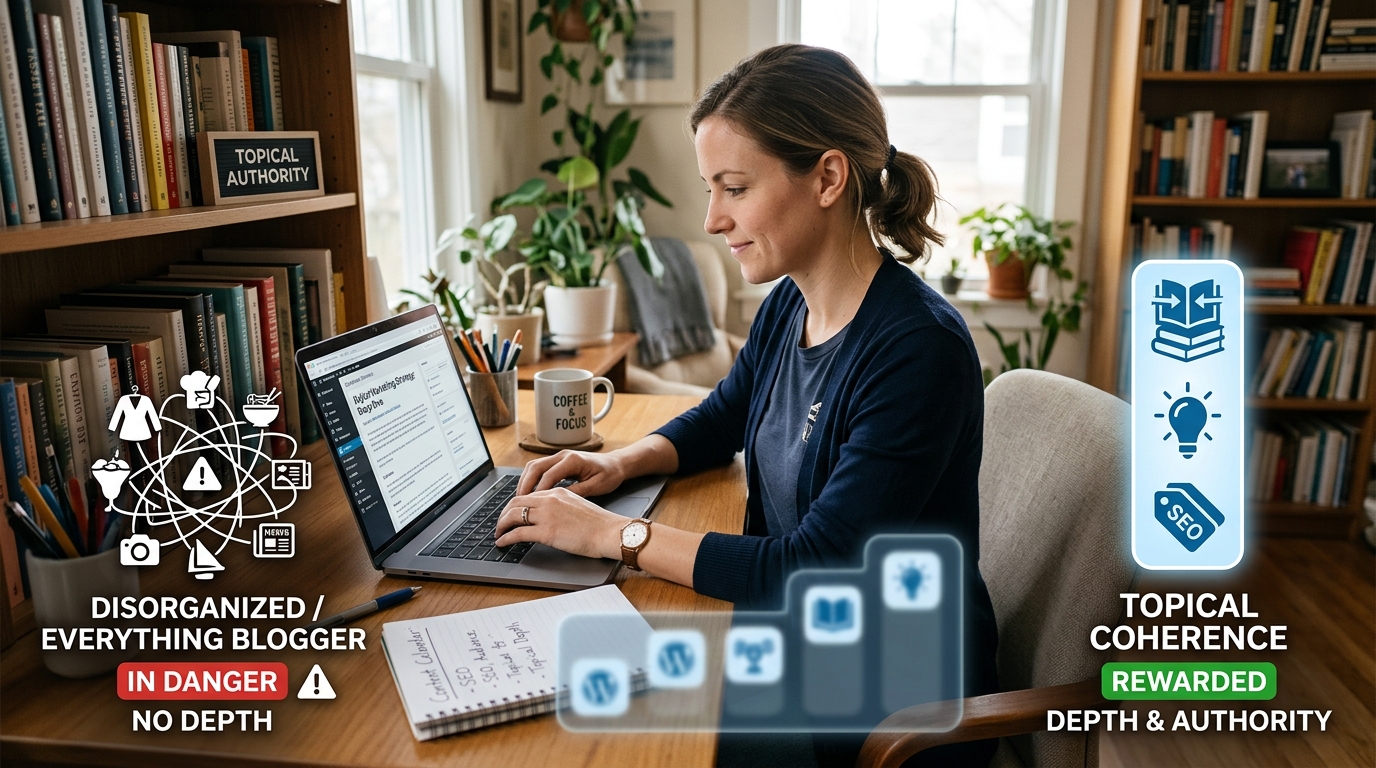
A likely June 2026 Pattern is a greater emphasis on thematic coherence. Locations that maintain a clear focus can benefit. Sites that loosely post on unrelated topics in the interest of driving traffic may struggle.
That doesn’t mean every site has to be narrow. This means that each section must have a legitimate connection to the brand, audience and expertise behind the content. If you run an SEO publication, your content ecosystem should feel like a knowledge system rather than a warehouse.
A knowledge system versus a warehouse. This distinction is the most useful framework for understanding where Google is going. Things are stored in a warehouse. You can find what you need if you know what you’re looking for. A knowledge system connects ideas.
Each piece relates to the others. The whole is more meaningful than the sum of its parts because the connections between the individual parts signal real expertise and not keyword targeting.
What thematic coherence looks like in practice
Instead of ranking random articles, Google now ranks your site’s overall competency in a niche. A website that deals with SEO regularly will rank better for SEO-related topics than a general blog that occasionally publishes posts about SEO. Niche authority is stronger than ever.
For bloggers, this is a direct call to examine the content mix on your website. When you cover personal finance, travel, and fitness at the same time without a common thread, each topic section competes independently without being reinforced by domain-level topic authority.
The same 50 personal finance articles that focus on a finance-focused area – or a clearly defined finance section of a broader website – have significantly more topical weight.
The solution is not necessarily to delete content that already exists. It’s a consideration of what you release next. Each new article should reinforce your topical authority in your primary niche – by answering related questions, covering subtopics in depth, and building internal link connections that create a true knowledge system rather than a collection of disjointed posts targeting various keywords.
The little niche blogger advantage
We will see more and more smaller bloggers with solid social proof begin to outdo larger companies that have lost their soul and personal touch in the name of increasing shareholder value. EEAT is social proof – people saying positive things about you on social media, case studies on other sites, and evidence that others say you are an expert at something.
This is really encouraging news for individual bloggers. A small, narrowly focused blog with a clear voice, a defined niche, and authentic social proof – real people in the niche recommending it – is exactly the type of site that wants to be rewarded with Google’s thematic coherence signals. The advantage of being a specialist with a real perspective has never been greater in the history of search engine optimization.
Reddit – R/Blogging on Topical Authority and Niche vs. General Blog Strategy: https://www.reddit.com/r/blogging/search/?q=topical+authority+niche+blog+Google+2026
X/Twitter – SEOs and bloggers discuss thematic coherence and June update: https://x.com/search?q=topical+coherence+Google+update+blogger+2026&f=live
Quora – Should bloggers focus on one niche to get better Google rankings? 2026: https://www.quora.com/search?q=blogger+one+niche+topical+authority+Google+2026
Quick links:



