



Summary
- Most bruises result from minor injuries, but some sexually transmitted diseases can cause them.
- Unexplained bruising may indicate a systemic infection such as HIV, chronic hepatitis, or disseminated gonorrhea.
- Unexplained, frequent, or severe bruising combined with other symptoms requires immediate medical evaluation and STD testing. Early diagnosis leads to better results.
Most bruises occur from hitting furniture or overdoing it at the gym. But what if bruises keep appearing without a clear cause?
Although rare, certain sexually transmitted diseases (STDs) can cause unexplained bruising by affecting your platelets, blood vessels, liver function, or immune system.
But how does this happen?
STDs can cause a variety of symptoms – or none at all.
What are bruises and why might they be related to sexually transmitted diseases?
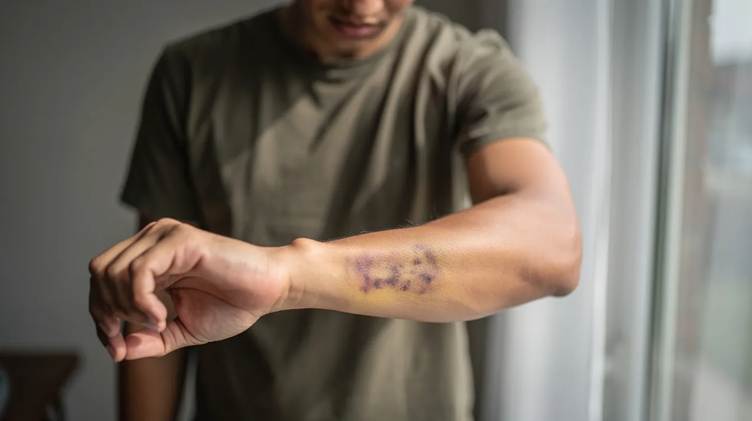
A bruise occurs when tiny blood vessels under the skin become damaged, allowing blood to leak into surrounding tissue. The color of your skin changes over time—first red or purple, then blue-black, green-yellow, and finally brown—as your body breaks down the trapped hemoglobin. Most bruises result from obvious, minor trauma, such as hitting your knee against a wall or getting your finger caught in a car door.
However, sometimes bruises occur more frequently than expected, in unusual places, or without injury. Infectious diseases, including some common sexually transmitted diseases, could be a cause for thought here.
Do sexually transmitted diseases often cause bruising?
Bruising is a rare, indirect symptom of some sexually transmitted diseases. Certain sexually transmitted diseases can alter your body’s clotting mechanisms or vascular integrity in a way that increases the likelihood of bruising.
HIV
Particularly untreated or advanced cases where immune system impairment is well documented.
Secondary syphilis
The rash at this stage may mimic a bruise due to its copper-brown color and vascular involvement.
Chronic hepatitis B and hepatitis C
Progressive liver damage impairs the production of clotting factors and reduces the number of blood platelets.
Rare cases of gonorrhea
Disseminated gonococcal infection (DGI) can cause vasculitis and purpuric skin lesions.
It should be noted that certain sexually transmitted diseases can cause rashes or sores that may look like bruises.
You should first rule out non-sexually transmitted causes of bruising
Before attributing bruises to a sexually transmitted disease, consider more common explanations. Many of these are uncomplicated and treatable.
- Age and gender. As we age, the skin becomes thinner and the capillaries become more fragile, so even a small bump can leave visible marks.
- Medication. Aspirin, NSAIDs (such as ibuprofen), warfarin, direct oral anticoagulants, systemic steroids, and some antidepressants can all increase bleeding.
- Intense training or trauma. Weight lifting, contact sports, or repetitive stress can cause deep muscle bruises that appear days later as “mystery” bruises – especially in areas you wouldn’t normally associate with the activity.
- Malnutrition. A lack of vitamin C weakens collagen and makes capillaries brittle (a condition formerly called scurvy). Vitamin K deficiency impairs the production of several clotting factors and leads to prolonged bleeding.
HIV infections and unexplained bruising
HIVThe virus responsible for acquired immunodeficiency syndrome (AIDS) is a common sexually transmitted disease that attacks CD4 immune cells. Without HIV treatment, the virus progressively weakens the immune system, leaving the body vulnerable to opportunistic infections and a range of diseases Skin complications.
Bruising during HIV infection is usually due to an ineffective immune system. Living with HIV for a long period of time can weaken your immune response to opportunistic infections, increasing the risk of developing diseases that can affect the risk of bruising and lower the body’s platelet count.
Bruising can also be a side effect of some antiretroviral medications, but this side effect is very rare.
Syphilis rash vs. bruising
syphilis is a bacterial infection caused by bacteria (Treponema pale), often acquired through oral sex, vaginal intercourse or anal sex.
In secondary syphilis – typically several weeks after a chancre appears and disappears – a widespread rash develops that can sometimes be confused with bruising:
- Red, coppery, or brown spots on the torso, arms, and especially the palms and soles of the feet.
- Lesions can be flat (macular) or slightly raised (papular) and are generally 3–10 mm in diameter.
The rash of secondary syphilis occurs in approximately 75-90% of untreated infections, with palms and soles affected in approximately 60% of these cases.
Several features help distinguish the rash from common bruises: The lesions are usually symmetrical and widespread, non-tender, and not limited to trauma-prone areas. Accompanying symptoms include a sore throat, fever, swollen lymph nodes, patchy hair loss and fatigue.
Chronic hepatitis B, hepatitis C and bruising problems
Hepatitis B And Hepatitis C targets the liver. Both infections can be transmitted through the exchange of infected body fluids during vaginal, anal and oral sex. Non-sexual transmission routes include:
- Contaminated blood transfusions
- Sharing needles for injecting drugs
- Sharing hygiene items such as razors and toothbrushes
- Needlestick injuries
- Unsterilized tattoo or piercing equipment
Chronic hepatitis B and C can cause bruising in some people. The damage caused by both infections impairs the liver’s ability to produce clotting factors that the body needs to control bleeding.
Can gonorrhea cause bruising?
gonorrhea is a very common sexually transmitted disease that affects the urethra, cervix, rectum and throat. Many people develop mild infections that cause minimal or no obvious symptoms, so these infections can spread unnoticed through unprotected sex with an infected partner.
In typical genital infections, this sexually transmitted disease does not easily cause bruising. However, in rare severe systemic complications, bruising may occur.
In approximately 0.5-3% of gonorrhea casesGonorrhea bacteria enter the bloodstream and cause a disseminated gonococcal infection (DGI). DGI can sometimes cause a rash with pink and red patches that may break open and look like a bruise.
Some of the more common gonorrhea symptoms include:
- Unusual vaginal or penile discharge
- Burning or pain when urinating
- Pelvic or testicular pain
- Pain during sex
- Rectal discomfort or discharge (anal infection)
- Sore throat (oral infection)
Prolonged untreated infection can lead to pelvic inflammatory disease (PID), infertility, and chronic pelvic pain, even without bruising. An infected person can also unknowingly spread the infection to sexual partners if they only have mild symptoms.
Preventing sexually transmitted diseases – and the bruises they can cause
Practical prevention strategies:
- Condom use: Consistent and correct use of condoms or dental dams during oral, vaginal and anal sex is one of the most effective barriers. Using condoms reduces the risk of contracting a sexually transmitted disease by 70-80%.
- Selectivity in sexual partners: Limiting the number of sexual partners and avoiding overlapping partners when possible can reduce exposure. Communicating with partners about STD status is critical.
- Regular screening: For sexually active individuals, regular STD testing every 3-6 months is recommended.
- Vaccination: Vaccines against HPV and hepatitis B are available to prevent infections. The HPV vaccine protects against high-risk types of HPV that cause cervical and other cancers. The hepatitis B vaccine is recommended for infants, healthcare workers and people with multiple sexual partners.
FAQs
Can a sexually transmitted disease be the only reason I bruise easily?
It’s actually rare for a sexually transmitted infection to be the cause of your bruising. Doctors typically look for several contributing factors – medications, alcohol consumption, age-related skin changes, diet, liver disease and congenital bleeding disorders all play a role. HIV, chronic hepatitis B or C, and advanced syphilis can cause bruising, but this is rare. However, it never hurts to rule out sexually transmitted diseases as a cause.
What do sexually transmitted bruises typically look like?
There is no single “classic” bruising pattern that occurs as a result of a sexually transmitted disease, but common manifestations include:
- Scattered purple or red spots (petechiae) from low blood platelets, often on the lower legs or mucous membranes
- Flat purple spots (purpura) on the arms, legs, or torso
- A widespread brownish or red rash on the palms and soles of secondary syphilis
What should I do about my bruises if my STD tests come back negative?
Negative STD results are reassuring but do not resolve unexplained bruising. The next step should be further evaluation with your medical team.
How often should I get tested for STDs if I’m worried about bruising and other subtle symptoms?
If you are sexually active, especially if you have multiple sexual partners, we recommend getting tested every three months. After a known high-risk exposure, you should get tested as soon as possible.
Final thoughts
Unusual symptoms can cause great concern. If you are concerned about your sexual health, it is always a good idea to get tested. Book an STI screening at a sexual health clinic near you by clicking the button below.
Don’t leave your sexual health to chance.



