



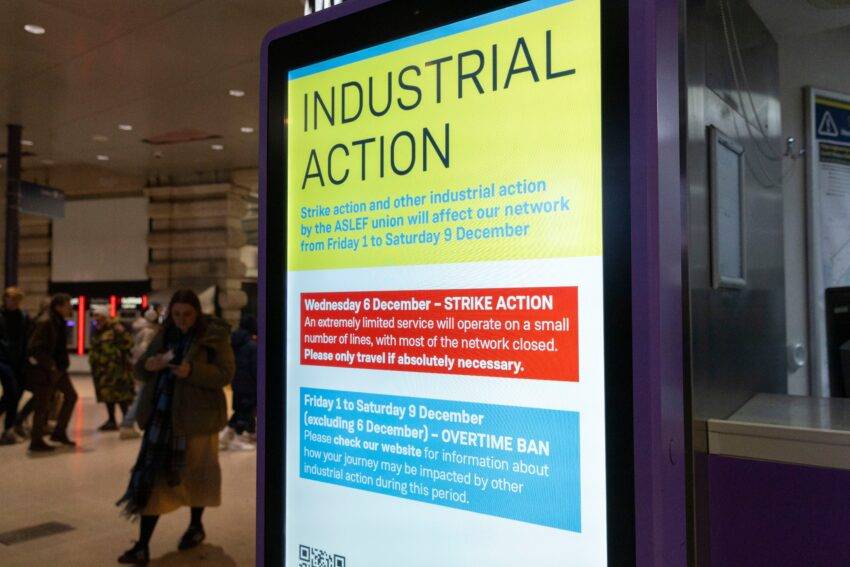
London’s small and medium-sized businesses are bracing for a tough week of disruption as London Underground drivers prepare for two 24-hour strikes in a dispute over working patterns that threatens to drain millions of pounds from the capital’s already fragile hospitality and night-time economy.
Members of the Rail, Maritime and Transport (RMT) union will switch off from midday on Tuesday 21 April and from midday on Thursday 23 April. Transport for London (TfL) is warning operators and passengers to expect “significant disruption” across the network. A separate strike by 150 Unite members working as bus station and network traffic controllers, taking place from April 23 to 25, is expected to worsen the misery.
For entrepreneurs across the capital, the timing couldn’t be worse. Hospitality, retail and leisure operators are already grappling with a new wave of energy price increases, ongoing wage pressures and uncertain consumer confidence. Industry leaders warn that the loss of reliable overnight transport could sink vulnerable SMEs.
TfL has published a daily forecast of likely disruption. Regular services are expected to operate until mid-morning on Tuesday, April 21, with availability tapering off before the midday strike. Any trains still running will be stopped early and TfL is advising those who need to travel to complete their journey by 8pm.
On Wednesday April 22nd, train services will start later than usual, with no trains expected before 7.30am. Significant disruption is expected on all lines until midday, with a gradual recovery throughout the afternoon and evening.
The pattern repeats on Thursday April 23rd, with normal services until mid-morning and a strike at 12pm causing significant disruption into the evening. There will be no service again before 7:30am on Friday April 24th and there will be ongoing disruption across the network.
Although some routes will operate a reduced timetable, TfL has confirmed there will be no service at all on the Piccadilly and Circle lines, no trains on the Metropolitan line between Baker Street and Aldgate and no service on the Central line between White City and Liverpool Street. Trains that actually run are likely to be sporadic, crowded and unable to accommodate every waiting passenger.
The Elizabeth Line, DLR, London Overground and trams will operate as usual.
In addition to the disruption, seven Stagecoach bus routes from Bow Bus Garage in East London will be affected by a 24-hour strike from 5am on Friday April 25. Routes 8, 25, 205, 425, N8, N25 and N205 are all in service, although TfL expects routes 25 and 425 to maintain near-normal services for most of the day. The N8 will operate a reduced route between Hainault and Liverpool Street at its usual frequency, while the remaining routes are likely to be severely delayed or canceled.
At the heart of the dispute is TfL’s proposal to introduce a four-day week for rail operators. The union called the plan “fake” and argued it would simply reduce existing working hours to fewer days without bringing any real improvements.
The RMT initially suspended strike action last month after TfL management agreed to negotiations, but over the weekend accused the operator of not saying anything.
RMT general secretary Eddie Dempsey said the union had “engaged in negotiations with TfL in good faith throughout the process”, adding: “Despite our best efforts, TfL appears unwilling to make any concessions to avert strikes. This is extremely disappointing and has baffled our negotiators. TfL’s approach does not lead to industrial peace and will anger our members who want to see a negotiated solution to this avoidable dispute.”
Claire Mann, TfL’s chief operating officer, responded that the proposals were fair and flexible. “We have submitted proposals to the RMT for a four-day week. This will allow us to offer rail operators an additional day off while aligning the London Underground with the working patterns of other rail operators, improving reliability and flexibility at no additional cost. The changes would be voluntary, there would be no reduction in contractual working hours and those who wish to maintain a five-day week could do so.”
For Michael Kill, chief executive of the Night Time Industries Association (NTIA), the latest strike is another hammer blow to a sector that is running on empty.
“As the sector faces a renewed increase in energy and operational costs, this new wave of strike action creates even more uncertainty that businesses simply cannot cope with,” he said. “Margins are being put under pressure from all directions and trust is becoming increasingly fragile.”
Mr Kill questioned the broader purpose of the industrial action. “The ongoing disruption to transport services raises the question of who actually benefits? Because currently it is businesses, workers and the general public who are paying the price for the reckless actions of a few.”
He warned that the knock-on effects go far beyond the loss of customer traffic. “Without reliable overnight transport, employees are struggling to get to work, customers are staying away and businesses are losing essential business. Many venues are already under severe financial pressure, continued disruption only compounds the risk.”
Mr Kill acknowledged workers’ right to withdraw from work but called for an urgent return to the negotiating table. “We respect the right to strike, but this situation cannot continue. All parties must come to the table and find a solution, because continued uncertainty at a time like this will have serious and lasting consequences for London’s night-time economy.”
TfL recommends travelers use their journey planner to plan their routes in advance and check the status of routes in real time via the live status page. For SMEs, the industry’s message is simpler: prepare for a difficult week and demand that both sides find an agreement before the damage to the capital’s economy becomes permanent.



