



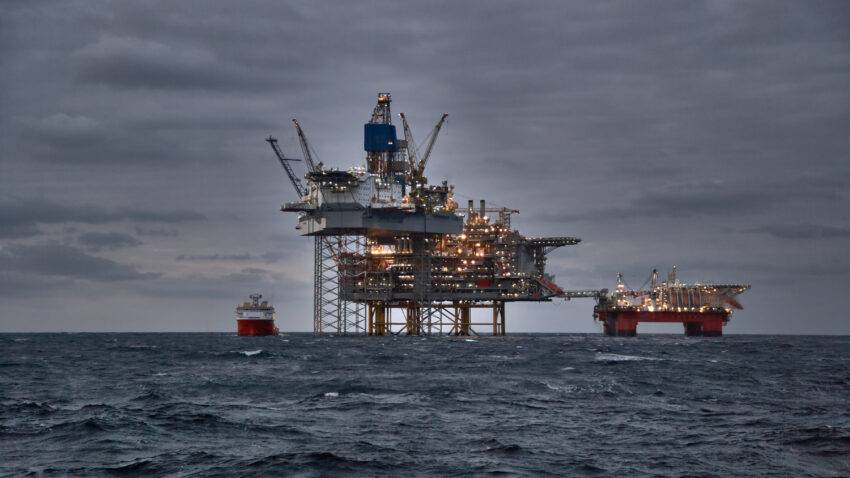
Britain’s position as a global climate leader is facing a critical test as senior figures in international diplomacy have warned that any attempt to open new oil and gas fields in the North Sea would deal a major blow to global efforts to reduce greenhouse gas emissions.
The government is facing increasing pressure from the oil industry, the Conservative opposition, Reform UK, certain trade unions and factions in the Treasury to grant new drilling licenses. This comes despite research showing that the two largest remaining fields, Rosebank and Jackdaw, would replace only 1% and 2% of Britain’s gas imports respectively, bringing no significant benefits to either prices or energy security.
The North Sea basin is now more than 90% exhausted and the extraction of the remaining hydrocarbon reserves is becoming increasingly costly and energy-intensive. But the political push for new licenses continues, putting Ed Miliband, the minister for energy security and net zero, in an increasingly uncomfortable position.
Nicolas Stern, a professor at the London School of Economics, warned that new drilling would be damaging on multiple fronts: bad for growth, bad for energy security and a damaging signal to the international community. Lord Stern pointed to the UK’s track record as the first G7 nation to commit to net zero emissions by 2050, as well as its influential climate legislation, and argued that the world would be watching closely as the UK changes course.
The backlash from developing countries was particularly severe. A senior African negotiator said anonymously that the continent would reject any expansion of oil production by the United Kingdom, calling it fundamentally contrary to the Paris Agreement. Mohamed Adow, director of Nairobi-based think tank Power Shift Africa, warned that approving new projects would signal that short-term interests were being prioritized over long-term responsibilities, setting a precedent that may prove impossible to contain.
The timing is particularly sensitive. Britain was a key backer of a global conference on the fossil fuel transition to be held in Colombia later this month. However, Miliband will not attend and climate chief Rachel Kyte will take his place, a decision that is likely to disappoint campaigners who credited the energy secretary with brokering a last-minute deal at the Cop30 summit in Brazil last November.
Christiana Figueres, former executive secretary of the U.N. Framework Convention on Climate Change, acknowledged the geopolitical pressures driving the energy security debate but argued that expanding drilling risks blocking infrastructure that is increasingly out of sync with the direction of the global energy system. True energy independence, she suggested, lies in expanding clean domestic energy, not extending the life of declining industries.
The strategic concern of the British business community is clear. Many developing countries are considering whether to use their own fossil fuel reserves instead of investing in renewable energy. If they chose the former path, the world would far exceed the CO2 limits that scientists deem necessary to avert the worst consequences of climate breakdown. As one senior development official put it, developing countries are already wondering why they should give up their own resources if Britain wouldn’t do the same.
A Miliband ally defended the government’s position, describing the decision to halt new exploration licenses as a milestone for a major oil and gas producing country. A government spokesman confirmed that clean energy and climate action remained at the heart of the agenda, including what he called a world-leading commitment to stop licensing new fields.
Whether this commitment will endure in the face of political and industrial pressures will be one of the key questions for UK energy policy in the coming months.



