



Bugatti has released a series of episodes over the past year highlighting the technology, design and execution of the Tourbillon, the French brand’s latest hypercar, for which all 250 examples have already been snapped up.
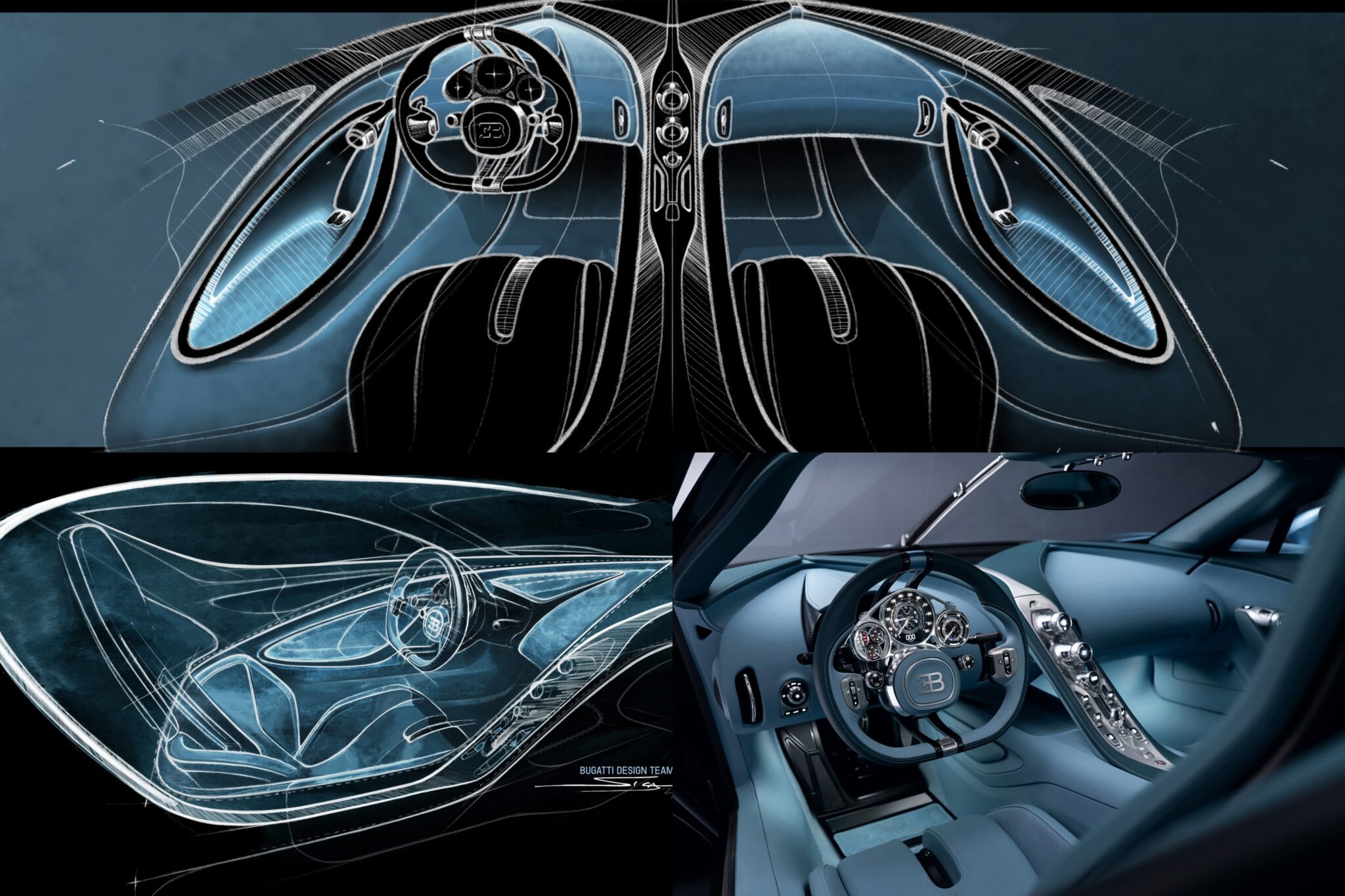
So far the series has covered everything from aerodynamics to exterior design influences, and even CEO Mate Rimac himself gave an overview of the new V16 engine. The latest episode focuses on some of the details of the Tourbillon’s exquisite interior, its conscious pursuit of timelessness, and the clock-inspired instrument cluster for which this Bugatti hypercar is named.
“Like any precious watch, a Bugatti vehicle must be timeless; these objects are passed down from generation to generation. With the tourbillon, it must retain its own character and not follow trends. That’s why we chose analogue technology in the digital age – where watchmaking art meets digital detoxification.” -. Design director Frank Heyl, Bugatti.
Inside the tourbillon, Bugatti’s iconic center line and C-line converge, creating a clear separation between driver and passenger, a detail also seen in the outgoing W16-powered Chiron. A horizontal color split reinforces the separation, while newly developed fabrics for the seats and door panels sit alongside supple leather. Bugatti calls this philosophy “Car Couture” and translates the logic of haute couture into a tailor-made automotive interior.
The analog theme culminates in the steering wheel and instrument cluster. The fixed hub steering wheel allows the rim to rotate freely around a stationary airbag while integrating controls and paddle shifters. Underneath is a fully analogue gauge, co-developed with master Swiss watchmakers, featuring milled aluminum casings, skeletonized mechanisms and crystal displays. Speaking of displays: the central screen is present, but remains largely hidden behind the dashboard and can be opened at the push of a button.
“The role of an interior designer is of course to design the complete vehicle interior from the first sketches through to production. But we have to take many aspects into account along the way – not only the DNA of Bugatti and ensuring that we take into account all the stylistic characteristics of the brand, but also develop a theme; a user sequence that is understandable.” – Chief Interior Designer Ignacio Martinez, Bugatti.
Martinez goes on to say that during the design process, the team also had to consider critical modern safety requirements while maintaining the core design ethos of a brand like Bugatti: appeal and long-term prestige are just as important as outright performance. In 50 years, a screen and the technology embedded within it might feel outdated or unusable. However, since everything is linked to the world of watchmaking and this semantic connection, it should be ensured that the tourbillon’s cabin remains relevant for decades to come.
Images: Bugatti



