



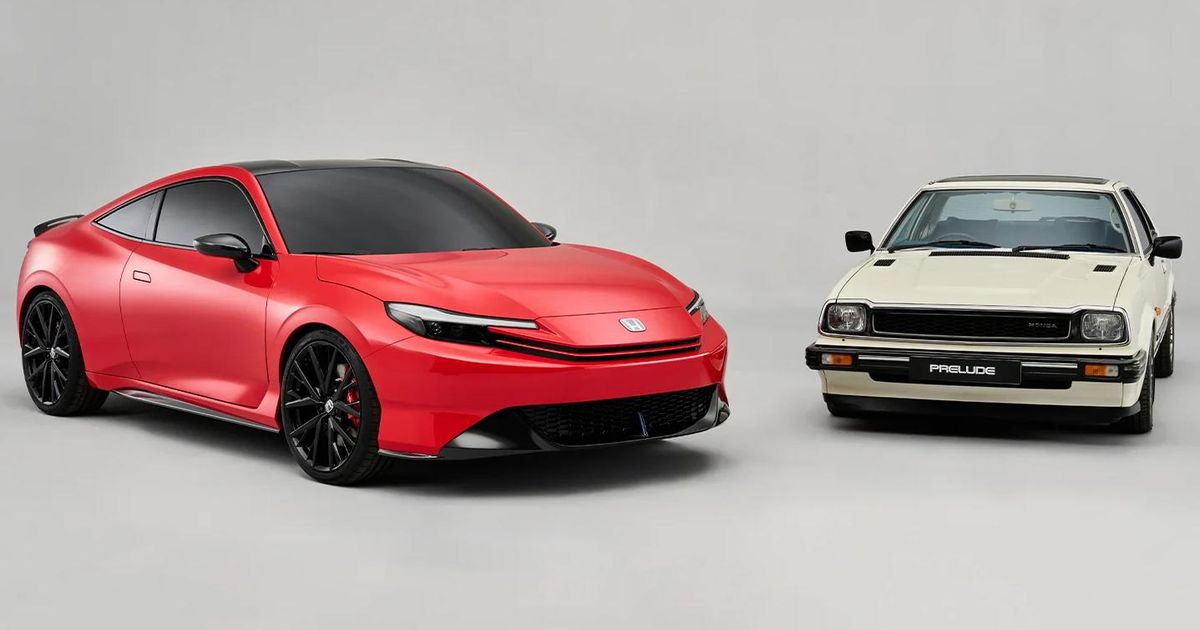
The Honda Prelude returns to Australia after a 25-year absence.
It is an iconic nameplate for the Japanese brand, which has produced five generations of ultra-modern coupes since its introduction in 1978.
The Honda Prelude served as a showcase for innovation over the years, introducing many new technologies for the first time, including Honda’s state-of-the-art VTEC (Variable Valve Timing & Lift Electronic Control) in a production model and four-wheel steering.
Each generation has helped shape the local enthusiast scene and laid the foundation for the model’s return.
The sixth generation (pictured above) will continue this tradition and usher in an exciting new chapter for the storied emblem, as well as for sports car enthusiasts and Honda Australia itself.
“Prelude offers a rare combination of nostalgia and performance with broad appeal to generations of Honda customers old and new,” said Honda Australia director Robert Thorp.
So let’s take a trip down memory lane and take a look at the legacy of the Prelude nameplate before the all-new model hits local showrooms next year.
First generation (1978–1982)
The first version of the Honda Prelude appeared in Japan in 1978 and worldwide from 1979 to 1982.
Although the Australian presence of this earliest generation was limited, it served as a starting point for the Prelude’s identity: a two-door coupe derived from the Accord-based chassis architecture.
It was known in global markets as one of the first Hondas to come with a factory-fitted sunroof as standard.
It was aimed more at teenage buyers who wanted something sporty, yet reliable and economical, rather than something completely exotic.
The model was relatively rare in Australia and is therefore now more of a niche item for collectors than a common sight.
From a traditional perspective, the first generation set the blueprint: a standalone Honda coupe positioned above the regular sedan/hatchback variant and favoring driver-focused packaging and moderate performance.
This foundation would be expanded even further with the next generations.
Second generation (1983–1987)
When the second generation Prelude was launched in 1983, the changes were significant and the impact was immediate.
Pop-up headlights were introduced worldwide – a design feature of many sports coupes of the ’80s and ’90s – and a lower, more dynamic body.
Technology also evolved as Honda’s PGM-FI (Programmed Fuel Injection) system became standard in some markets and the car was equipped with features never seen before in its class such as anti-lock brakes – a first for Honda.
In Australia, the second generation gained more recognition than its predecessor. Although not yet mainstream, the coupe provided a sharper image and proved popular with younger drivers seeking Honda brand reliability and sporty edge.
The combination of front-wheel drive with improved suspension and a more aggressive look made the car competitive in the emerging performance coupe market in the mid-1980s.
This generation really cemented the Prelude as a true sporty Honda and not just a stylish sedan derivative. It also created a following that eagerly welcomed the arrival of the third generation.
Third generation (1988–1991)
The third generation of the Prelude, launched internationally in 1988, marked one of the model’s most influential chapters.
While Australian import numbers were modest compared to mass-market sedans, local enthusiasts view this era as a high point for the Prelude brand.
Its technical features included four-wheel steering (4WS) – another world first for Honda – and a double wishbone suspension, which contributed to its excellent handling.
Performance also improved as 2.0 liter twin cam engines became more common and the car’s dynamic capabilities made it a favorite among driving enthusiasts.
Its combination of relative affordability, Honda engineering quality and sporty features ensures that it still enjoys a strong following today.
In many ways it was the forerunner of what the nameplate would become in the 1990s.
Fourth generation (1992–1996)
The fourth-generation Prelude raised the bar even higher.
It replaced the pop-up headlight design with fixed headlights, refined aerodynamics and improved interior comfort, presenting a sophisticated, sporty coupe.
Under the hood, it offered advanced features for its time – particularly the VTEC engine variants – as well as improved suspension, giving it a balance between everyday usability and sporty driving.
While the exotic all-wheel steering was dispensed with in some markets, the focus shifted to refinement, performance and handling.
But despite its virtues, the broader two-door coupe market was shrinking, and the Prelude faced competition from rear-wheel-drive, turbocharged alternatives.
Nevertheless, the fourth generation cemented the Prelude’s reputation for handling and technical integrity. And his legacy continues in the collector community, explaining the anticipation for the nameplate’s revival.
Fifth generation (1997–2001)
The fifth and final generation of the original Prelude was a pivotal moment.
It had a more aggressive design – sharper lines and a bolder profile – and incorporated technologies such as Honda’s Active Torque Transfer System (ATTS), which improved cornering dynamics.
However, in the late 1990s, the sports coupe market came under pressure and sales of the Prelude began to decline. Ultimately, Honda phased out the nameplate worldwide in 2001.
The end of this generation marked the conclusion of the first chapter of the Prelude story in Australia. Its legacy is strong and its reputation for performance, chassis refinement and standing in club culture kept the name alive.
With the arrival of the new generation Prelude in 2026, the car’s history in Australia will come full circle – from its humble beginnings to its cult status among enthusiasts.
The five generations summarized above form the roots of what Honda hopes will be a meaningful future for the brand name in the local market.
MORE: Explore the Honda showroom



