



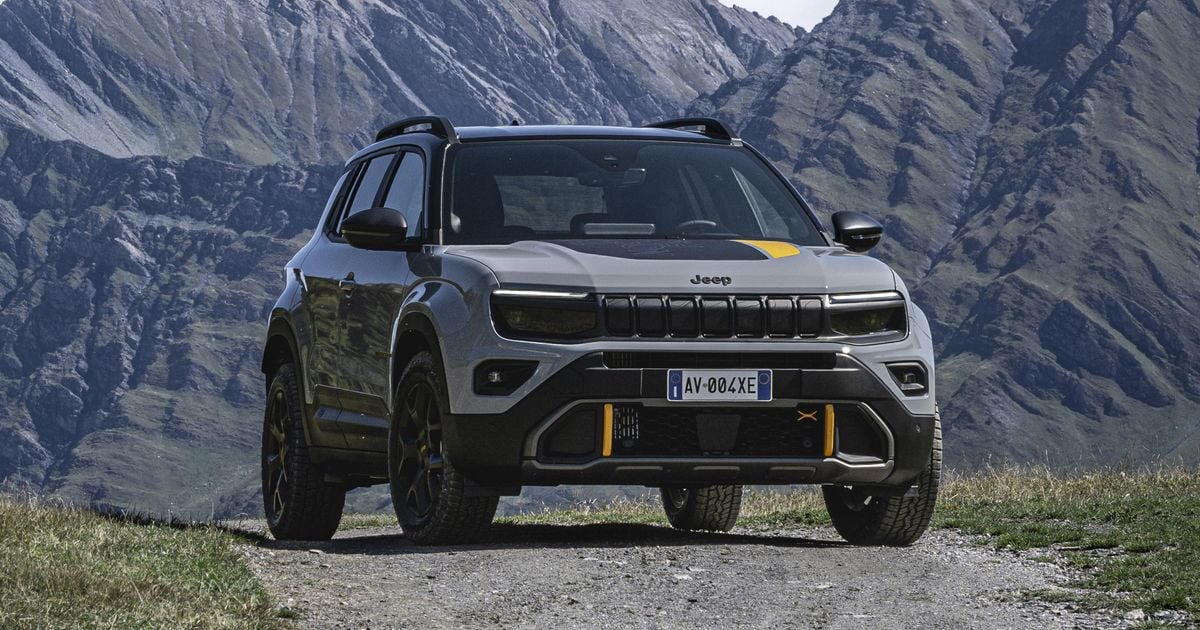
Jeep has begun to address doubts about its future in Australia. The brand’s vice president of global product planning, Matt Nyquist, said right-hand drive markets remained a priority for the iconic US off-road brand and that Australia was still firmly in the mix.
The comments came during an interview with Australian media at the 60th Easter Jeep Safari in Moab, Utah.
“The right-hand drive markets are so important… we are committed to right-hand drive (and) to Australia,” Mr Nyquist said.
He also made it clear that the production of right-hand drive cars at the factory was not a mere exercise, describing it as “the most difficult and expensive part to put into action”.
With Daily Sparkz you can save thousands on a new car. Click Here to get a great deal.
“Obviously things change quite a bit, particularly in this industry. There are a lot of developments and things like that. But with all of our key products we want to make sure we protect them for right-hand drive,” he said.
These assurances are important as Jeep’s Australian business has seen sales decline in recent years. After peaking at 30,408 deliveries in 2014, Jeep sales fell to 2,456 in 2024 and just 1,682 in 2025, which also means the local dealer network now includes around 44 retailers.
This pressure intensified in March 2025 when Stellantis stopped selling the Jeep Grand Cherokee locally, leaving Jeep in Australian showrooms with only the Avenger light electric SUV, Compass small SUV, Wrangler large off-roader and Gladiator dual cab pickup.
Stellantis Australia said at the time it had made the “difficult decision” to pause the large SUV, but added: “The Jeep brand remains fully committed to the Australian market and Stellantis continues to invest heavily in its global product portfolio.”
The The Grand Cherokee, once Australia’s best-selling large SUV, is one of the clearest symbols of this decline. Local sales fell from 16,582 in 2014 to just 645 in 2024, the last full year of sales.
Still, Mr Nyquist argued Australia still made obvious sense for the brand.
“What a great market for Jeep too. I mean, it’s certainly had its ups and downs, but you get a lot of environment, a lot of scenery that requires the 4×4… requires the ability,” he said.
“It’s definitely a good synergy between the brand and this market.”
He also pointed out that the commitment is not just limited to the vehicles themselves. When asked about accessories, Mr. Nyquist said Jeep is “definitely committed to delivering everything we can from Mopar,” adding that “it’s always been a key part of our strategy for people to take the Jeep and then make it their own with accessories.”
There was some caution regarding future products, but no retreat from right-hand drive. “We want to ensure that all of our key products are suitable for right-hand drive,” Nyquist said.
He added: “Jeep going global is always in the calculation and we are constantly studying it because there are mature markets. There is a sales history, particularly in Australia…”
This message is broadly consistent with what Jeep has been saying for years. In 2022, then-world boss Christian Meunier said that right-hand drive markets such as Australia, Japan and the UK would remain “critical” to Jeep’s growth and that “future models will also be right-hand drive for the vast majority of the product”.
Jeep also still publicly advertises fresh products for Australia. On its local website, the brand says it has “repositioned” pricing across the entire lineup, that the new Jeep Compass will launch in 2026 and that the all-electric Jeep Recon is “on the horizon.”
There is still a long way to go between commitment and a turnaround, especially as Jeep sales continue to decline. But if you take the message from Moab at face value, Jeep isn’t now spending the hundreds of millions required to develop right-hand drive vehicles just to leave Australia.
MORE: Explore the Jeep showroom



