



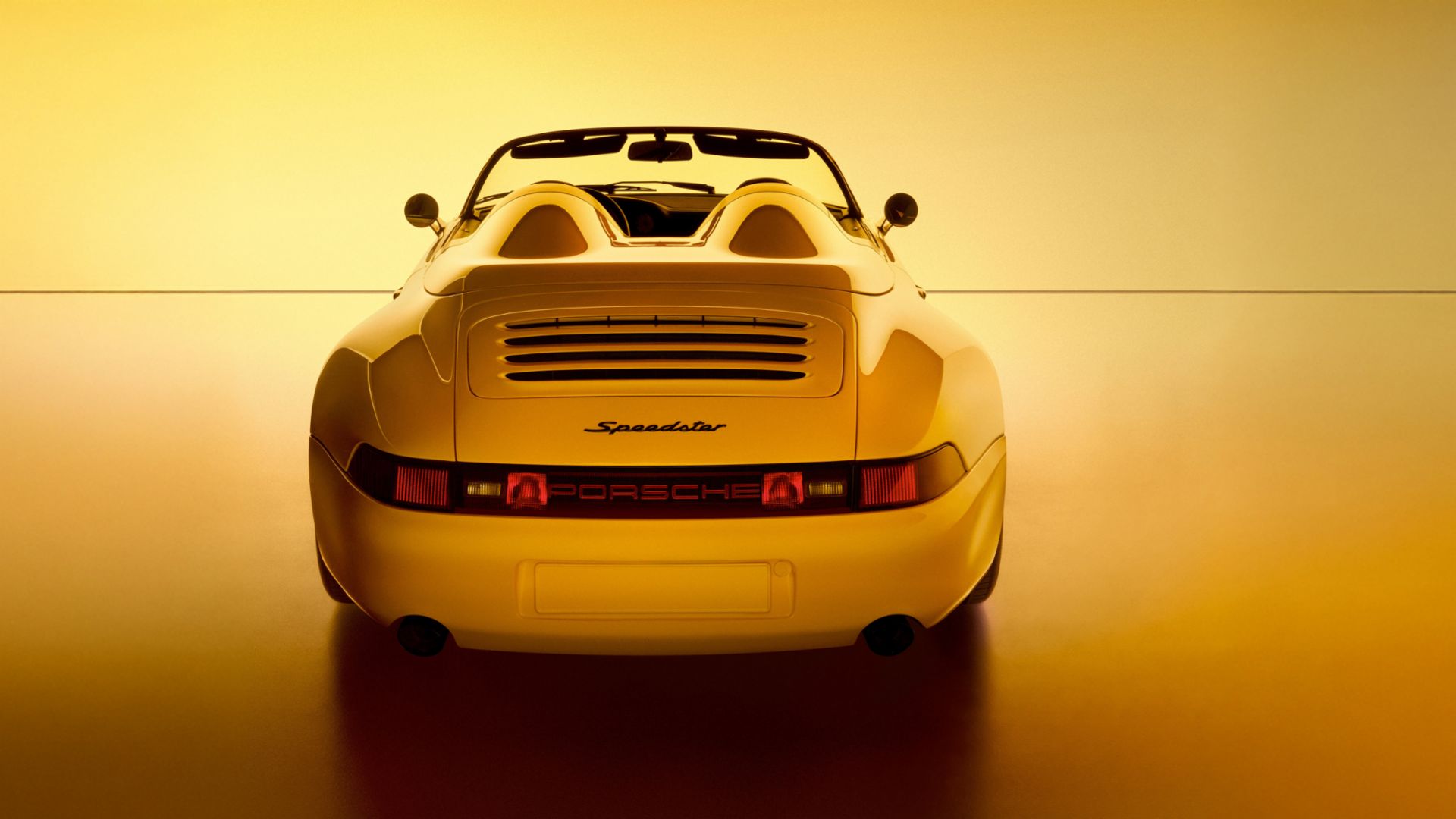
From rare custom projects to one-offs – discover some of the most exclusive and unique Porsches to ever leave Stuttgart.
Porsche’s history with one-off and custom-made products goes back a long way, long before personalization became a buzzword. As part of its Special Requests program and Exclusive Manufaktur department, Porsche has been quietly building extremely rare, highly personalized models for decades, often for collectors, celebrities and motorsport royalty. Whether it was a unique windshield wiper setup on a 356 B for Alfried Krupp or a fully street-legal 917 race car for Mansour Ojjeh, Porsche has always had a penchant for turning unusual wishes into reality. These aren’t your average special editions either, as they feature fully bespoke interiors, wild color combinations and even redesigns of the entire body, all done with factory care.
Things really took off in the 1980s and 1990s, when wealthy customers pushed the limits of what Porsche could do. Hi-fi systems, pastel interiors and hand-painted surfaces began to appear more frequently, setting the stage for today’s full-blown one-off buildings. With the revitalized Special Requests program, customers can now engage with designers and engineers to create truly unique cars, from stitching to paintwork to airbrushed artwork on the body. It’s not a quick process and definitely not cheap, but for some there’s nothing better than owning a Porsche that no one else has. Whether modern Taycan or classic 928 – these ultra-exclusive designs show what is possible when creativity meets German precision.
356 B Carrera 2 – rear window wiper (1968)
The industrialist Alfried Krupp von Bohlen und Halbach did not want to forego this special request, which was exotic at the time. His 356 A Coupé from 1955 had already been equipped with a rear window wiper especially for him. But with his 356 B Carrera 2 from 1962, implementing this customer request proved to be extremely difficult because the rear window was larger than its predecessor. In order to create space for the windshield wiper and its motor, a hole had to be drilled in the windshield. After several cracks in the windshield during installation, the Porsche mechanic was finally able to report success.
911 2.0 – rally model (1968)
In 1968, this 911 was converted for the London-Sydney Marathon, which covered more than 16,000 kilometers through Europe, the Middle East, Asia and Australia. For river crossings, the tailpipe was extended to roof level, while the spectacular external tubular frame provided protection from rollovers and collisions with wildlife. Supporting motorsport drivers in a variety of, sometimes quite unusual, projects was one of the many reasons for founding the customer racing department in 1973. To this day, there is a close connection between racing and individualization.
917 “Kurzcheck” – road version (1975)
Converting a “short tail” 917 for public traffic was a particular challenge. The order came from the Italian spirits manufacturer Count Gregorio Rossi di Montelera, long-time main sponsor of Porsche Motorsport. Equipped with exterior mirrors, indicators and a rear silencer, the racing car was finally approved in the US state of Alabama, which also permitted operation in the count’s adopted home of France. A second “917 Street” was presented to a German customer in 1977.
935 – “Street” (1983)
Hardly any individual item from the Porsche special request department has captured the zeitgeist as much as the conversion of the 911 Turbo into the 935 racing car for the Saudi Arabian businessman Mansour Ojjeh, who placed the order for an extensive Formula 1 engine project (TAG Turbo from Porsche). With a low-profile body, cream caramel leather interior, candy apple paint and wood paneling, the 935 “Street” became a symbol of the 1980s. The resulting small series led to the founding of Porsche Exclusive in 1986, since 2017 under the name Porsche Exclusive Manufaktur.
959 (1989)
A small series of seven Porsche 959s, which were manufactured for a member of the ruling family of Qatar, is still unique to this day. In collaboration with the Porsche designers in Weissach, a color concept with stripes was developed. Special colors such as Sahara beige, royal blue and silk green were combined with correspondingly colored buffalo leather trim with stripes. The exhaust tailpipe plated with 24-carat gold was another exquisite customer request. Instead of the traditional Porsche emblem, the new owner’s golden family crest adorns the hood, hub cover and interior.
911 GT2 (993) – Coppa Florio (1997)
With only 193 units produced in total, a 911 GT2 based on the 993 generation is a rare sight anyway. But this GT2, customized to a customer order, is unique – also because it is the only one to wear the light blue color Coppa Florio (Code 360). And then there are the rims of the Speedline wheels painted in the same color and the consistently defined full leather interior. The interior and cockpit are finished in special leather in Can Can Red throughout, including the ignition lock rosette, light switch, radio, rear-view mirror and round instruments.
911 Turbo Cabriolet (996) (2004)
The aim of the “Most Personal Car” initiative, introduced in 2004, was to promote individualization at Porsche worldwide. One of the most spectacular examples was when furniture designer and architect Carlo Rampazzi was presented with the 911 Turbo Cabriolet (996) of his dreams – with the identical shade of orange both inside and out. The inspiration was a porcelain plate, a color sample that isn’t all that unusual considering the Exclusive consultants were once given the painted panel of a kitchen door as a reference. To date, there are no limits to the customer’s choice of colors.
Panamera – Exclusive Series (2014)
Exclusive Manufaktur refined a small series of 100 vehicles based on the Panamera Turbo S, which was presented at the Los Angeles Auto Show in 2014. For the first time, Porsche offered a two-tone gradient paint finish, with Deep Black Metallic below the door handles contrasting with a chestnut brown metallic that darkens toward the rear. Each vehicle was painted by hand to achieve a harmonious color gradient. The seats and other interior surfaces were upholstered in Italian Poltrona Frau leather in the color Agatha Chestnut Brown. The Rear Seat Entertainment System Plus with integrated camera and DVD player also celebrated its premiere.
911 Sport Classic & 911 Classic Club Coupé (1999-2022)
With the small series of the 911 Sport Classic (992, right), limited to 1,250 vehicles, Porsche Exclusive Manufaktur presented the second of four collector’s variants of the Heritage Design Edition. Popular design elements, colors and materials from the 1960s and early 1970s have been reinterpreted in this 911. The original 911 and the 911 Carrera RS 2.7 (1972) served as visual inspiration for the 2022 version as well as for its direct predecessor, the limited 911 Sport Classic based on the 997 model (center of the picture), presented in 2009. 250 vehicles. The 911 Classic Club Coupé, a unique model based on the 996 generation and part of the newly launched special request program, was manufactured and auctioned on behalf of the Porsche Club of America. In common with the two Sport Classic models, the factory one-off has the double dome roof, the fixed ducktail-style rear spoiler and the double stripes that run across the hood, roof and rear spoiler.
Taycan Turbo S – “Ding Yi” (2023)
Another extraordinary, inspiring vehicle was created as part of the special request program in collaboration with the Chinese artist Ding Yi. Inspired by his painting Appearance of Crosses 2022-2, parts of the image decorate the body and interior. The application process was quite complicated and required precise masking techniques as well as innovative painting and printing processes. With the basic color deep blue and the integration of artistic elements, the sporty sedan combines aesthetics and technology. Ding Yi, a renowned representative of abstract contemporary art, would also like to use the Taycan Turbo S in his hometown of Shanghai.
928 S – “Boo” (2024)
The special requests department refined a 928 S, built in 1981, for the singer-songwriter Álvaro Soler. The interior is dominated by Pampa Brown leather, while the exterior shines in the individual color Soler Yellow Metallic. The sound system was developed in collaboration with the engineers at the Porsche Development Center in Weissach and was perfectly tailored to Soler’s seating position and taste – for a 360-degree sound experience. After completing the unique piece, the Sonderwunsch team surprised the musician with a highlight: a guitar painted in the color of the car, including a matching case – covered in the same leather as the vehicle interior.
Source: Porsche



