



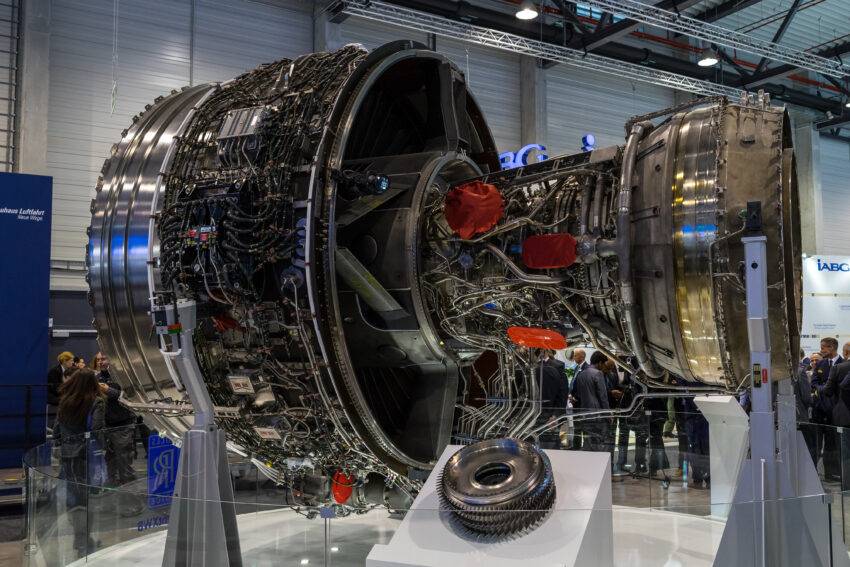
Rolls-Royce has brushed aside investor jitters over the war in Iran, telling shareholders it remains firmly on track to generate underlying operating profit of at least £4bn this year, with engine flight hours 15 per cent above pre-pandemic levels.
The Derby-based aircraft engine giant used its annual general meeting this week to draw a line under several weeks of share price turmoil sparked by Donald Trump’s decision to launch military action in the Middle East. Since hostilities began, the shares have lost almost 20 percent of their value, sliding from an all-time high of £13.63 and wiping more than £20 billion off the company’s market capitalization. Shares rallied 2.9 percent in early trading on Thursday to trade at £11.06.
The market’s concern was understandable. Rolls-Royce’s civil aerospace division relies heavily on long-range aircraft operating through the Gulf, and the threat of a blockage in the Strait of Hormuz raised the specter of fuel shortages, route cancellations and a new bout of pain for an engine maker still reeling from the pandemic-related shutdown of the global fleet.
Nevertheless, the picture painted by CEO Tufan Erginbilgic, now almost three and a half years after the transition, is one of remarkable resilience. In the first four months of the year, engine flight hours were above internal forecasts. In the three months ended March 31, large engine flight hours increased 5 percent to 115 percent of 2019 levels. The company is sticking to its full-year forecast of 115 to 120 percent.
Crucially, Rolls-Royce reported a “significant recovery” in aviation activity in the Middle East. The flying hours of the Airbus A350, which was powered exclusively by the Derby-built Trent, said airlines had moved with unexpected speed to move planes to other growth markets, leaving far fewer planes parked than analysts had feared. Qatar Airways is the second largest A350 operator in the world after Singapore Airlines, both of which operate extensively in Gulf traffic.
The group also noted that the majority of aircraft currently grounded for economic reasons, primarily fuel costs, are short-haul, narrow-body aircraft, a segment that Rolls-Royce does not serve.
For Erginbilgic, the message to shareholders is that diversification serves its purpose. Civil aerospace remains the engine room, but the defense arm, which supplies engines for the Eurofighter Typhoon, Royal Navy warships and submarines, and several U.S. military programs, is thriving amid increased Western defense spending. The energy systems division, which makes diesel engines and generators for everything from data center backups to combat vehicles for the German and Polish armies, is benefiting from the global data center boom and upgrades across NATO. A fourth, emerging branch, small modular nuclear reactors, officially supported by the British government, offers longer-term options.
The reiterated forecast suggests underlying operating profit of £4 billion to £4.2 billion this year and free cash flow of £3.6 billion to £3.8 billion.
“We had a strong start to the year. Operating performance was strong across the group,” said Erginbilgic. “With our diversified portfolio of three high-performing businesses, we are creating a more resilient and agile Rolls-Royce that can better respond to changes in the external environment. The conflict in the Middle East has caused uncertainty in the industry. We are taking the necessary measures and expect to fully mitigate the current financial impact of the disruption to our business.”
For SME suppliers across the Midlands aerospace cluster, many of whom rely on Rolls-Royce’s order book to keep their own production lines running, the reaffirmed guidance will be a welcome reassurance that the engine maker’s recovery story remains intact, regardless of geopolitics.



