



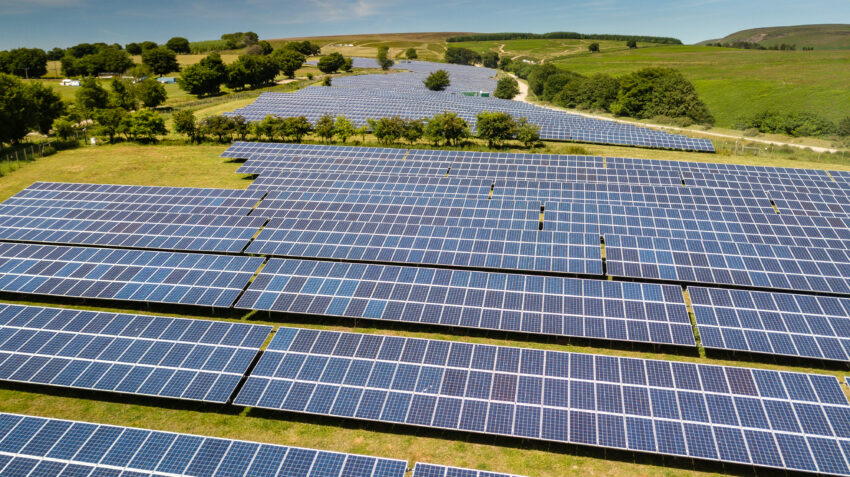
Britain’s solar sector made a statement of intent this week, breaking power generation records on consecutive days as ministers gave the green light to the country’s largest solar installation.
Solar farms in England, Wales and Scotland produced 14.1 GW of electricity as of midday on Monday, exceeding the previous benchmark of 14 GW set last July. That mark barely lasted 24 hours before output pushed the bar to 14.4 GW on Tuesday afternoon.
The milestones came on the same day the government confirmed approval for Springwell, a massive solar farm in Lincolnshire that is expected to generate enough electricity for around 180,000 homes at peak demand. Energy Minister Michael Shanks called the decision central to protecting consumers and businesses from volatile international fossil fuel markets and called solar energy “one of the cheapest forms of energy available.”
Springwell follows the approval of Tillbridge, another major plant in Lincolnshire, backed six months earlier, a notable doubling in a county where Reform UK’s anti-renewables stance has gained traction. Combined with 23 other major clean energy projects approved since Labor took office in 2024, the pipeline could power the equivalent of up to 12.5 million homes.
The solar records come barely a fortnight after wind energy production hit its own new high of 23.9GW. That means the output of gas-fired power plants has fallen to its lowest level in two years and is a test run for the government’s goal of creating a virtually carbon-free grid by 2030. The electricity network operator is apparently preparing to operate the network without gas generation for short periods this summer.
For the thousands of smaller businesses who are understandably concerned about their energy costs, direction matters. The government has streamlined planning for so-called plug-in solar systems and updated building standards to require solar panels in all new homes from 2028. These measures should, over time, ease the burden on businesses operating in newer commercial and mixed-use buildings.
The crucial question remains whether the pace of deployment is fast enough to deliver the legislative cuts promised by ministers. However, as records fluctuate and approvals flow, it is difficult to argue with the trend.



