



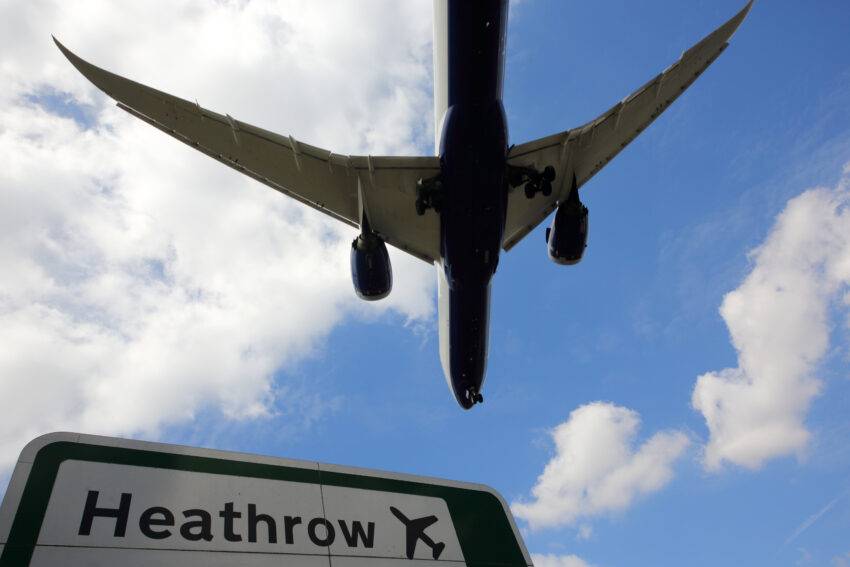
Plans to build a third runway at Heathrow Airport have come under renewed scrutiny after a report accused the airport of “misrepresentations” in its claims that the project could be completed within a decade without relying on taxpayers’ money.
The report, written by infrastructure consultant Paul Mansell, warns that the government-backed expansion could expose both the airport and airlines to major financial risks if the project experiences delays and cost overruns similar to those experienced by the HS2 rail system.
Heathrow estimates a third runway could be built along with major terminal and infrastructure upgrades costing around £49 billion, with the first flights operating by 2035. The airport has repeatedly emphasized that the project would be privately funded, meaning no direct taxpayer funding would be required.
However, critics argue that the actual costs of the expansion would ultimately be borne by airlines and passengers through significantly higher airport fees.
Airlines have already raised strong objections to Heathrow’s proposals, warning that the expansion could dramatically increase the cost of flying through Britain’s busiest airport.
Among the most vocal critics are the International Airlines Group, which owns British Airways, as well as Virgin Atlantic and other airlines that operate from Heathrow.
Airlines fear the project will be largely funded by higher landing fees paid by airlines to use airport infrastructure and often passed on to passengers through ticket prices.
Industry estimates suggest that costs per passenger could potentially double if Heathrow goes ahead with its proposed investment program.
The airport has also outlined plans to increase its capital expenditure to £59 billion during the next regulatory period, known as H8. This figure includes around £10 billion needed just to maintain and operate the airport over the next five years.
According to Mansell’s report, the level of spending represents a dramatic increase compared to Heathrow’s current levels of investment.
“The scale of proposed capital spending is staggering,” the report said, warning that consumers would ultimately bear the financial burden.
The report also questions whether Heathrow’s proposed timetable is realistic.
Even if the airport manages to obtain a building permit by 2029, the new runway would have to be operational six years later, according to the schedule.
Mansell argued that such forecasts risk falling into what experts call “strategic misrepresentation,” a phenomenon in which infrastructure backers underestimate costs or timelines to increase the likelihood of political approval.
According to the report, experts interviewed as part of the review bluntly described such forecasts as “delusion or deception.”
Heathrow has said the schedule depends on external factors, including planning reforms and government approvals, and insists the schedule remains achievable under the right conditions.
The report also raises broader governance and transparency concerns surrounding the expansion project.
It warns of a “loss of trust” between Heathrow and its airline partners, citing strained relations due to previous infrastructure investments at the airport.
Airlines have pointed to examples of significant cost overruns and delays in recent projects at Heathrow.
An example is the replacement of the baggage system at Terminal 2, where costs have risen from an original budget of £645m to almost £1bn. Another major infrastructure upgrade, which included a tunnel renovation, was reportedly delivered four times as quickly as originally estimated and more than a decade late.
The report argues that such examples raise questions about Heathrow’s ability to deliver a much larger project on time and within budget.
“If a similar failure occurs at Heathrow,” the report said, “it will fundamentally undermine British aviation, weakening confidence in Britain’s infrastructure and construction sector and potentially putting Heathrow and its airlines under the water.”
The report was commissioned by Heathrow Reimagined, a coalition of airlines and aviation stakeholders pushing for changes to the airport’s regulatory framework.
This follows a major decision by the Civil Aviation Authority, which is currently reviewing Heathrow’s proposed investment plans and the mechanisms that will allow the airport to pass on costs to airlines.
The report’s recommendations include reforms to Heathrow’s governance structure and the introduction of stronger oversight mechanisms to ensure airlines and passengers are more directly involved in key investment decisions.
It also suggests that an independent body such as the Civil Aviation Authority should play a greater role in examining Heathrow’s long-term spending plans.
Heathrow rejected the criticism, arguing that its track record shows the company is capable of successfully delivering major infrastructure projects.
An airport spokesman said the expansion plans had been developed taking into account lessons learned from previous mega-projects.
“We have learned the lessons from HS2 and are confident that our plans, building on our own successes of privately funded mega-projects such as Terminals 5 and 2, have been delivered on time and on budget,” the spokesman said.
Heathrow also urged airlines to engage constructively in discussions about expansion rather than commissioning “biased reports”.
Despite the criticism, the British government continues to broadly support expanding Heathrow’s capacity as part of a broader strategy to boost international connectivity and economic growth.
A Department for Transport spokesman said the expansion of Heathrow would strengthen Britain’s global trade links and attract investment.
“The expansion of Heathrow will attract international investment and strengthen the UK’s connectivity as the airport creates hundreds of thousands of jobs across the country,” the spokesman said.
The Transport Secretary has also launched a review of the Airports National Policy Statement, a key policy framework that underpins the approval process for major airport expansions.
The debate over Heathrow’s third runway has been ongoing for decades, with economic arguments for increased flight capacity weighed against environmental concerns and local opposition.
Supporters say the expansion is essential if Britain wants to remain competitive as a global aviation hub.
Critics warn the project could become another costly infrastructure saga as costs skyrocket and schedules slip.
With regulatory decisions looming and tensions rising between Heathrow and its airline customers, the future of Britain’s most ambitious airport expansion project is far from clear.



