



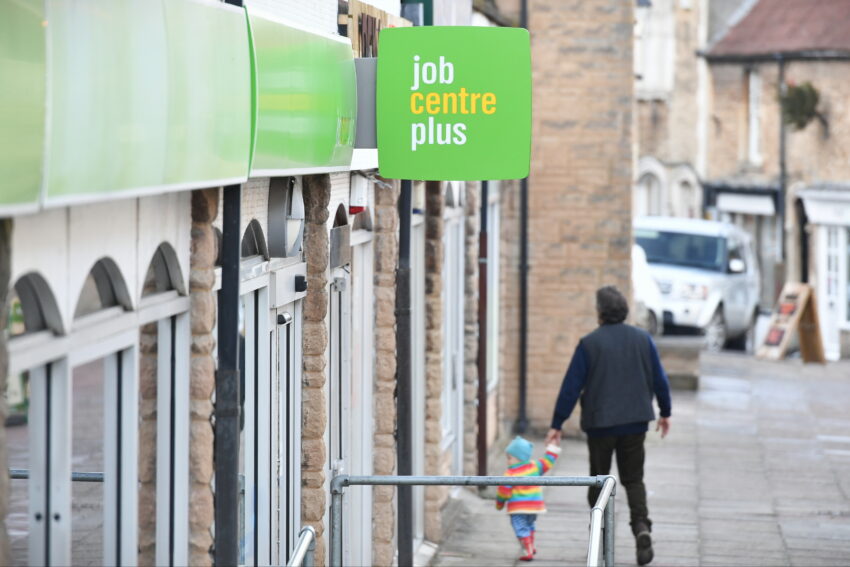
Unemployment in the UK has risen to its highest level in five years while wage growth continued to weaken, reinforcing expectations that the Bank of England will cut interest rates again in the coming months.
Official figures from the Office for National Statistics show the unemployment rate rose to 5.2 percent in the three months to December, up from 5.1 percent in the previous rolling quarter. Unemployment has increased slightly since 2022, reflecting a steady slowdown in the labor market.
At the same time, average earnings excluding bonuses rose 4.2 percent year-on-year, down from 4.5 percent in November and in line with economists’ forecasts.
The slowdown comes against a backdrop of higher labor costs after the Chancellor increased employers’ national insurance contributions by £25 billion in October 2024, along with increases to the national living wage.
Younger workers appear to be disproportionately affected. Payroll data shows that employment of people under 34 has fallen by 242,000 since mid-2024, when total payrolls peaked. In contrast, the employment of workers aged 35 and over increased by 71,000.
Martin Beck, chief economist at WPI Strategy, said higher labor costs are the biggest drag on entry-level hiring. “At the same time, given the rapid advances in AI, companies are likely to re-evaluate their junior roles,” he added.
The weakening labor market has bolstered market bets that the Bank of England will cut interest rates from their current level of 3.75 percent. Traders now expect about a 76 percent chance of a rate cut at the next meeting in March, according to Bloomberg data.
Paul Dales, chief UK economist at Capital Economics, said the data supported the view that policymakers had “at least a few more rate cuts up their sleeve”, with the likelihood of a rate cut in March increasing.
At its last meeting, the bank’s monetary policy committee voted 5-4 to keep interest rates stable, a narrower split than analysts expected. Governor Andrew Bailey has since indicated that further monetary easing is still possible this year.
Yael Selfin, chief economist at KPMG, said the latest figures would reassure rate-setters that wage pressures are easing. “The MPC will take comfort from the evidence that the labor market continues to weaken,” she said.
Wednesday’s inflation numbers will be closely watched. Economists expect the consumer price index to fall to 3 percent in January, compared with 3.4 percent in December, due to lower airfares, falling food prices and slower energy inflation. That would be the lowest value since March 2025.
Stephen Kinnock, Health Secretary, pointed to recent job creation and economic growth, saying Britain delivered the strongest growth among G7 European economies last year. He added that government initiatives to support employment and training were underway.
But business groups argue that recent employment reforms have made hiring more expensive and risky. Alex Hall-Chen of the Institute of Directors said an unemployment rate of 5.2 percent underscored the fragility of the labor market.
“The best way to boost employment is to make hiring staff less risky and more cost-effective for companies,” she said, calling for adjustments to the labor law and exemptions for small and medium-sized businesses.
Jonathan Moyes, head of investment research at Wealth Club, said the combination of weaker job growth and moderate wages could change the bank’s stance. “Wage growth was the final domino holding back interest rate cuts,” he said. “Now both employment and wages are weakening, and the case for further easing is getting stronger.”
For policymakers, the message from the data is clear: the labor market is losing momentum and the balance of risks could now be more towards supporting growth rather than containing inflation.



