



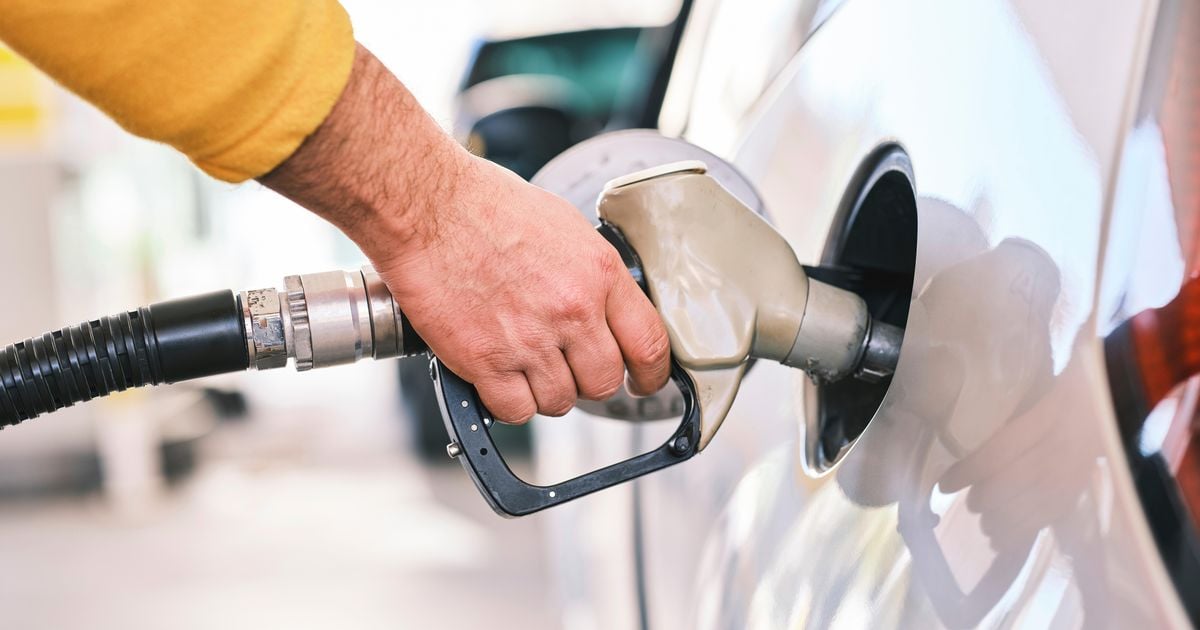
President Donald Trump’s administration has proposed significantly relaxing fuel economy targets for automakers.
In 2024, the National Highway Traffic Safety Administration (NHTSA) under President Joe Biden successfully changed the Corporate Average Fuel Economy (CAFE) standard to increase by eight to ten percent per year before reaching the 50.4 mpg (4.7 L/100 km) target in 2031.
NHTSA’s latest proposed rule change calls for the CAFE standard to be increased by 0.25 to 0.5 percent annually to reach a target of 34.5 mpg (6.8 L/100 km) by 2031. This makes the final target of 40.5 mpg (5.8 L/100 km) set during the first Trump administration even more relaxed.
The 50.4 mpg standard set by President Biden was seen as a way to encourage automakers to prioritize building electric vehicles without banning sales of new gasoline and diesel vehicles. NHTSA previously said the Biden-era rules would reduce fuel consumption by about 200 billion gallons (757 billion liters) by 2050.
This is in contrast to regulations adopted by the European Union in 2023, which effectively ban the sale of new petrol and diesel vehicles from 2035. With electric vehicle sales growth slowing significantly, some automakers and nations in the EU are currently pushing the European Commission to allow hybrid, plug-in hybrid and green fuels to be approved after 2035.
Interestingly, NHTSA is also proposing to reclassify passenger SUVs and small SUVs as passenger vehicles, which are currently considered light trucks along with pickup trucks.
NHTSA also wants to eliminate credit trading by 2028, which it describes as “a windfall for EV-exclusive manufacturers who sell credits to other non-EV manufacturers.” Tesla is one of the biggest beneficiaries of credit trading in the US.
After the proposed rule changes are published, the public and other interested parties will have 45 days to submit applications. NHTSA will hold a public hearing before the 45-day deadline and is expected to make changes thereafter.
The White House is touting the rule changes as a way to curb the rise in new car prices. However, the changes, once enacted, are unlikely to have an immediate impact on new car prices, as the current administration has already set the penalty for violating CAFE standards at zero dollars.
According to the White House, this move means that “the CAFE standards make sense” when “Democrats return to power.”
The proposed CAFE changes are this administration’s latest blow to emissions regulations. In addition to reducing fines for violating CAFE standards to zero, September also eliminated the federal $7,500 (AUD$11,300) electric vehicle tax credit and banned California from setting its own emissions standards, which 17 states followed.
Ford CEO Jim Farley praised the relaxed CAFE rules as a “victory for common sense and affordability.” Antonio Filosa, CEO of Stellantis, described the opportunity to boost V8 production as “simply huge,” adding: “It is a lever that we want to tighten very strongly next year and in the years to come.”
Environmentalists are less happy with the change, while California Gov. Gavin Newsom said the president “is proposing to lower fuel economy standards, which will force Americans to spend billions more at the pump while poisoning the air in our communities.”



