



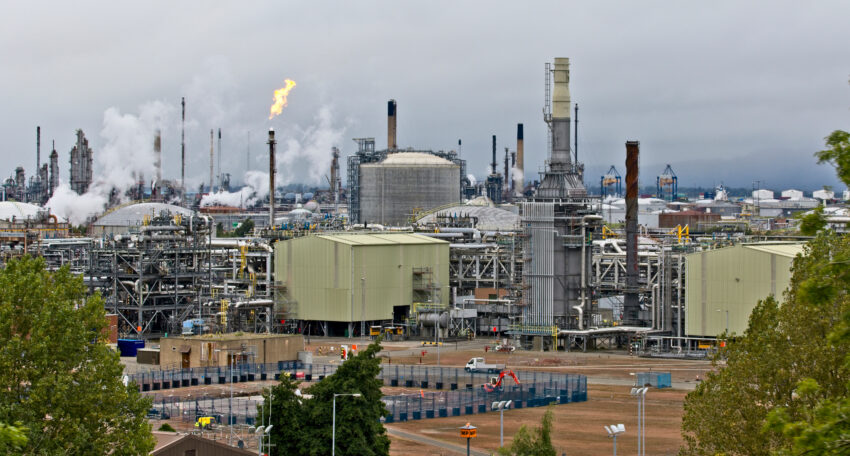
Britain’s largest chemical plant will remain open after Ineos secured more than £120 million in government support to protect around 500 jobs at its Grangemouth petrochemical site.
The rescue package will keep the Ineos Olefins & Polymers plant operating after the strategic site’s future was called into question earlier this year. The government and Ineos will jointly invest around £150 million in the power station, which ministers have classified as critical national infrastructure.
Sir Keir Starmer said the intervention demonstrated the Government’s commitment to protecting industrial jobs and supporting the manufacturing sector.
“When we said we would protect jobs and invest in Britain’s future, we meant it – and this is the proof,” the Prime Minister said. “Through partnership, determination and our modern industrial strategy, we are delivering new opportunities, fresh investment and security for Scotland’s next generation of workers.”
Sir Jim Ratcliffe, the founder and chairman of Ineos, welcomed the funding, describing it as “important support” for Britain’s manufacturing sector, despite his previous criticism of Labour’s energy and investment policies.
As part of the agreement, Ineos has guaranteed that public funds will be used exclusively to improve the Grangemouth site. The deal also gives the government the right to share in future profits from the plant, providing some protection for taxpayers.
Ratcliffe said: “Through this partnership, Ineos and the UK Government have demonstrated their commitment to operating the site and retaining jobs. The agreement contains safeguards to protect taxpayers’ money and ensures the funds are used to strengthen the long-term future of the plant.”
The company said it had already spent more than £100m maintaining operations in Grangemouth last year. However, the rescue comes after Ineos closed its ethanol production plant and oil refinery at the site earlier this year due to high operating costs.
Business Minister Peter Kyle said the deal would provide much-needed certainty for workers and the entire supply chain.
“The UK Government’s decision to intervene will protect Grangemouth as a site of strategic national importance and safeguard 500 vital jobs in the region,” he said. “By partnering with Ineos, we are securing the long-term future of the plant.”
The announcement comes at a difficult time for the UK chemicals sector, which has seen a number of closures and cutbacks. Earlier this month, ExxonMobil confirmed plans to close its Mossmorran ethylene plant in Fife in February after failing to find a buyer, putting more than 400 jobs at risk.
Exxon said the closure reflected the challenges of the UK’s current economic and political environment, citing high costs, market conditions and plant efficiency. Paul Greenwood, chief executive of Exxon in the UK, warned of an “absolute catastrophe” for the UK refining sector, citing rising carbon costs that foreign rivals are not having to contend with.
Refining and chemicals are currently not covered by the UK’s carbon border tax, introduced in 2027, which is designed to protect domestic industries by imposing equivalent carbon costs on imported goods.
With this in mind, ministers hope the Grangemouth deal will signal a more interventionist approach to protecting strategically important industries – even as wider questions remain about the long-term competitiveness of energy-intensive manufacturing in the UK.



