



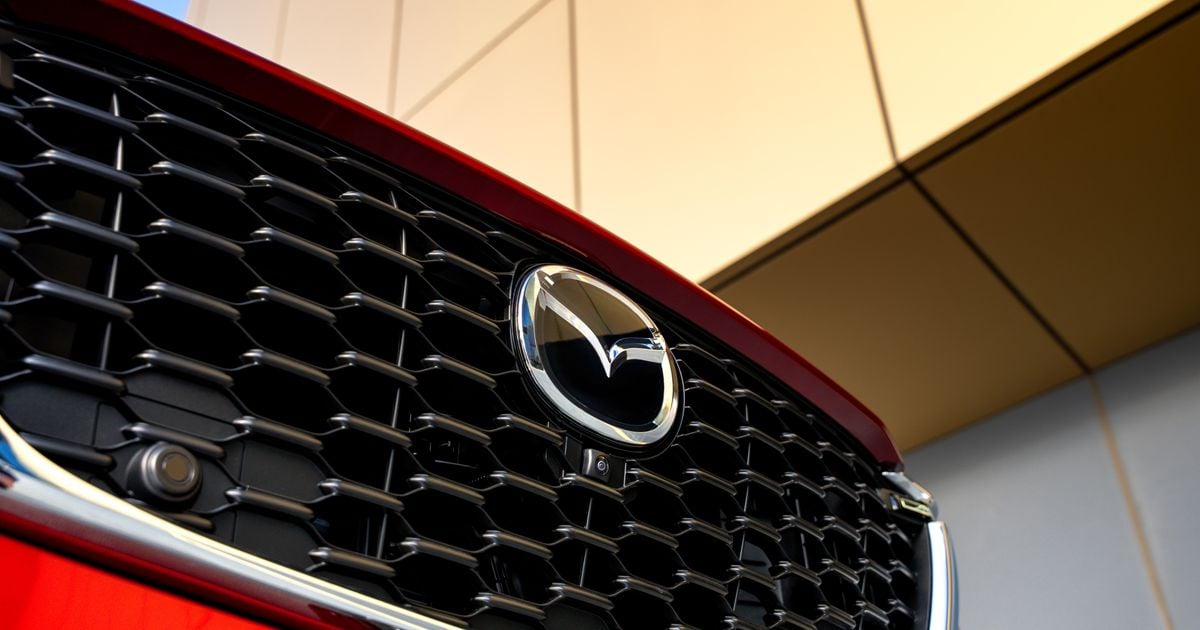
Volvo has earned a reputation for being a leader in vehicle safety, but as part of a new approach to testing the safety of new cars, Mazda is now at the forefront.
American non-profit organization Consumer Reports evaluated the overall safety of automakers based on several factors – not just the performance of their models in laboratory crash tests.
The companies’ product ranges were judged on whether they come with key crash-prevention technology as standard, whether the cars behave predictably, how intrusive the controls are – and how well they protect occupants and vulnerable road users in the event of a crash.
With Daily Sparkz you can save thousands on a new car. Click Here to get a great deal.
Mazda clearly beat the competition: more than 80 percent of its vehicles received the “best” safety rating – compared to only 25 percent of Volvo vehicles.
Accordingly Consumer Reports – which celebrates its 90th birthday in 2026 – Volvo’s cars performed worse due to their “distracting controls,” with the EX30 scoring the lowest in ease of use.
“If controlling the climate or audio functions distracts you from driving, that’s a blow to safety,” said Jake Fisher, senior director of auto testing at Consumer Reports.
It’s worth noting that Mazda’s new CX-5, its best-selling vehicle, misses out on the brand’s signature rotary infotainment controls and has also removed the physical climate controls. However, Mazda says it still attaches importance to minimizing driver distraction.
While Mazda won the safety crown, Genesis took second place, while Honda’s North American brand Acura took third place.
Lincoln and Hyundai rounded out the top five, while Honda, Nissan, Audi, Subaru and Kia rounded out the top 10.
Volvo took 12th place, ahead of Volkswagen, Toyota, Lexus, Mercedes-Benz and BMW.
Rounding out the list were Rivian, Tesla, Mitsubishi, Jeep and Land Rover – with the British premium carmaker coming in last place “due to its subpar performance in braking and emergency handling,” according to the report.
As reported in November 2025, the Australasian New Car Assessment Program – better known as ANCAP – has introduced new testing protocols from January 1, 2026, which now include electric car battery safety, intrusive driver assistance technology and whether a vehicle has buttons.
“From 2026, we are calling on car manufacturers to either offer physical buttons for key driver controls such as horn, turn signals, hazard lights, wipers and headlights, or to dedicate a fixed portion of the cabin screen to these primary driving functions,” ANCAP said in a written statement at the time.
MORE: The new ANCAP safety rating targets pesky technology, electric vehicles and triple zero calls



