



General Motors is taking a decisive step towards the next phase of intelligent mobility. At her GM Forward event in New York, CEO Mary Barra explained how this shift is unfolding in the areas of autonomy, software and energy systems.
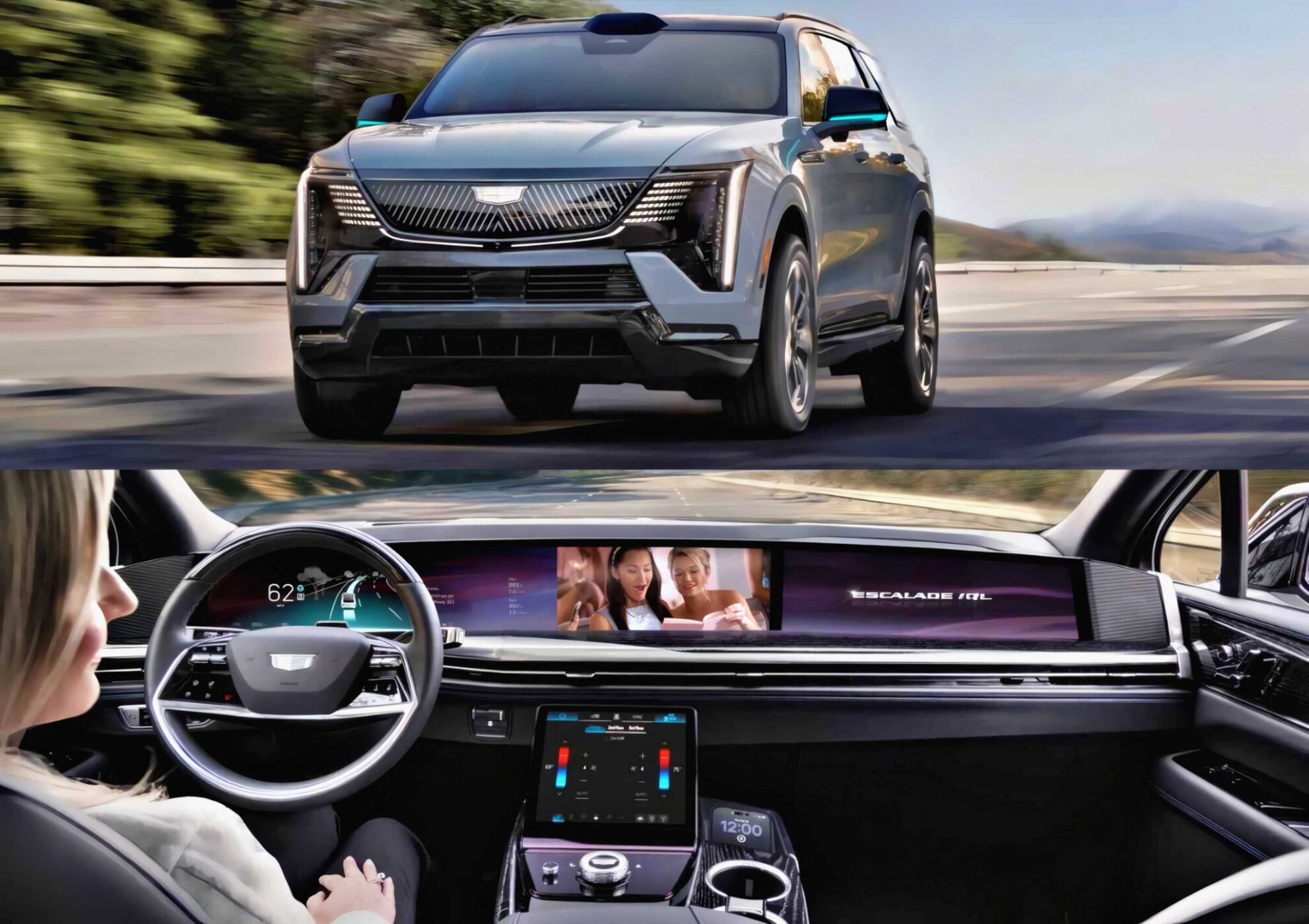
The announcement that garnered the most attention was 2028’s “eyes-off driving” with the Cadillac Escalade IQ. This marks GM’s move toward what the industry calls Level 3+ autonomy, where the vehicle can handle all aspects of driving under certain conditions without constant human supervision. Unlike Tesla’s camera-only approach to its self-driving system, GM’s system appears to feature a combination of high-resolution LiDAR, radar, cameras and sensors overlaid with real-time map data.
GM already has 600,000 miles of mapped roads in North America, and its Super Cruise system has logged 700 million hands-free miles without causing a technical accident. Backed by five million fully driverless miles from Cruise, GM’s autonomous subsidiary, the company says it is building one of the safest and most validated systems on the road.
This “safety first” philosophy stands in stark contrast to Silicon Valley’s “speed” mentality. GM’s method is slower but data-driven, combining a decade of on-road experience with continuous validation. The upcoming Escalade IQ will serve as a testing ground for this next-generation autonomy.
As for artificial intelligence technology, GM will also introduce conversational AI across its product lineup starting in 2026, using Google’s Gemini model. You can talk to your car and of course ask about maintenance alerts, route changes or even nearby restaurants. Later, GM plans to replace Gemini with its own internal AI, connected through the company’s OnStar service and trained on your vehicle’s behavior and preferences via OnStar’s cloud infrastructure.
The foundation of all this will be a centralized computing platform launching in 2028. Instead of dozens of separate control modules, a high-speed core will be responsible for propulsion, control, infotainment and security. GM says it will offer 10 times more over-the-air update capacity, 1,000 times more bandwidth and up to 35 times more AI performance than today’s systems.
On the manufacturing front, GM’s Autonomous Robotics Center in Michigan and its lab in California are developing “cobots,” collaborative robots that adapt to human workers using real-time telemetry and quality data.
With these announcements, General Motors is no longer positioning itself as a traditional automaker. It is transforming into a full-fledged technology company, bringing together hardware, AI and data in a unified mobility ecosystem, transforming one of America’s oldest automakers into a next-generation technology company.
Images: General Motors



