



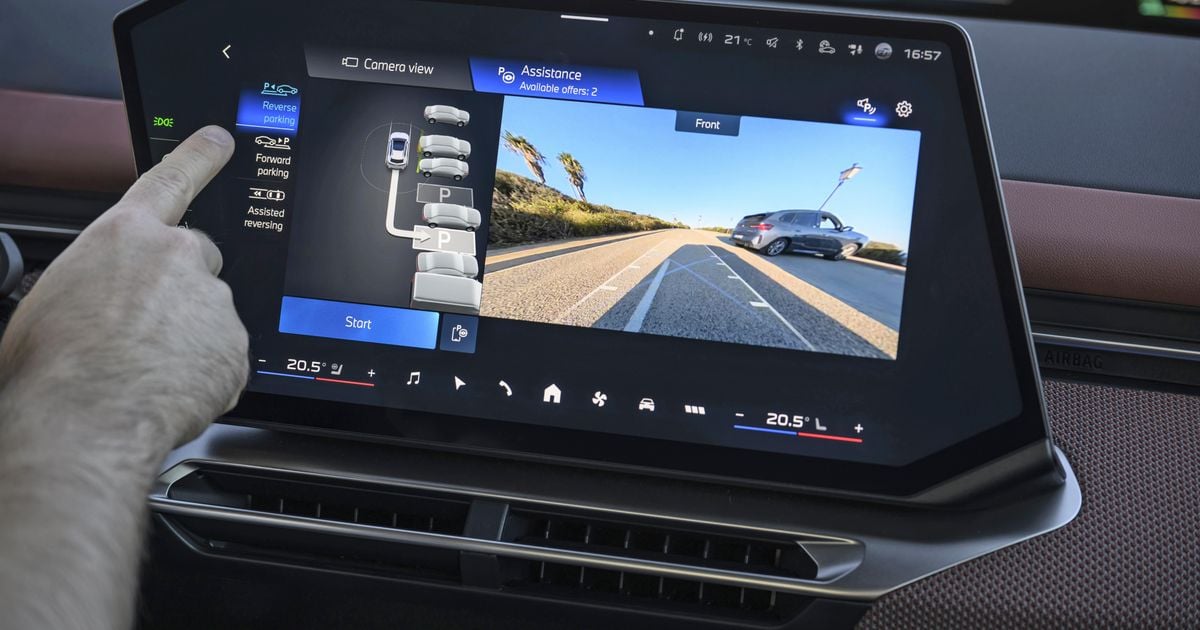
Have you ever felt like the technology in your new car is so distracting that it’s actually unsafe?
The advanced driver assistance systems (ADAS) division of the German automotive giant BMW agrees and is actively driving “intensive” internal discussions to better balance technological innovation and welfare.
Infotainment touchscreens are an important component of modern vehicles. All current BMW models feature a central touchscreen, and the brand proudly promotes its iDrive communications and entertainment system as a key selling point.
Increasingly, manufacturers are using infotainment systems to centralize key vehicle functions, including climate and media controls, at the expense of traditional physical buttons and switchgear. For example, Tesla models completely do without a central button bar and the upcoming BMW iX3 “Neue Klasse” does without physical air conditioning.
With Daily Sparkz you can save thousands on a new car. Click Here to get a great deal.
However, Dr. Falk Schubert, head of ADAS customer functions at BMW, admitted that this approach could lead to more driver distraction and poorer safety outcomes, even despite improvements in driver assistance systems.
“Yes, I see a conflict,” said Dr. Schubert told Australian media when asked about ADAS upgrades for the new iX3, which also features a new cabin layout with fewer interior buttons than its predecessor and an enlarged 17.9-inch infotainment screen.
“We want to make the user interface innovative and configurable, that’s what it’s all about.”
“But we’re keeping an eye on it. We see that the longer it takes you to press a button, the more your eyes are off the road and the more dangerous it becomes.
“You have to balance it out and learn over time.”
Manufacturers and regulators are already responding to complaints about the frustration and distraction caused by complex infotainment technology.
In response to negative feedback, Volkswagen has confirmed plans to reintroduce dashboard switches in future models, while a survey of Hyundai owners in North America in 2024 also showed disdain for removing physical buttons.
The Australian vehicle safety authority ANCAP has also addressed this problem with its new safety testing protocols.
“Starting in 2026, we are calling on automakers to either offer physical buttons for key driver controls such as horn, turn signals, hazard lights, wipers and headlights, or to dedicate a fixed portion of the cabin screen to these primary driving functions,” the current report says.
BMW hasn’t moved to remove the turn signal or windshield wiper stalks yet, but Dr. Schubert says certain teams within the company will continue to push for button reduction and further centralization of key functions.
Still, executives on the safe side of the company will make their own arguments.
“The more buttons you reduce and the more you put them on a screen, the easier it is to reprogram these things,” admitted Dr. Schubert in.
“At some point there has to be a consensus. But yeah, it’s a hot discussion right now, so let’s see how things develop over time.”
MORE: The new ANCAP safety rating targets pesky technology, electric vehicles and triple zero calls



