



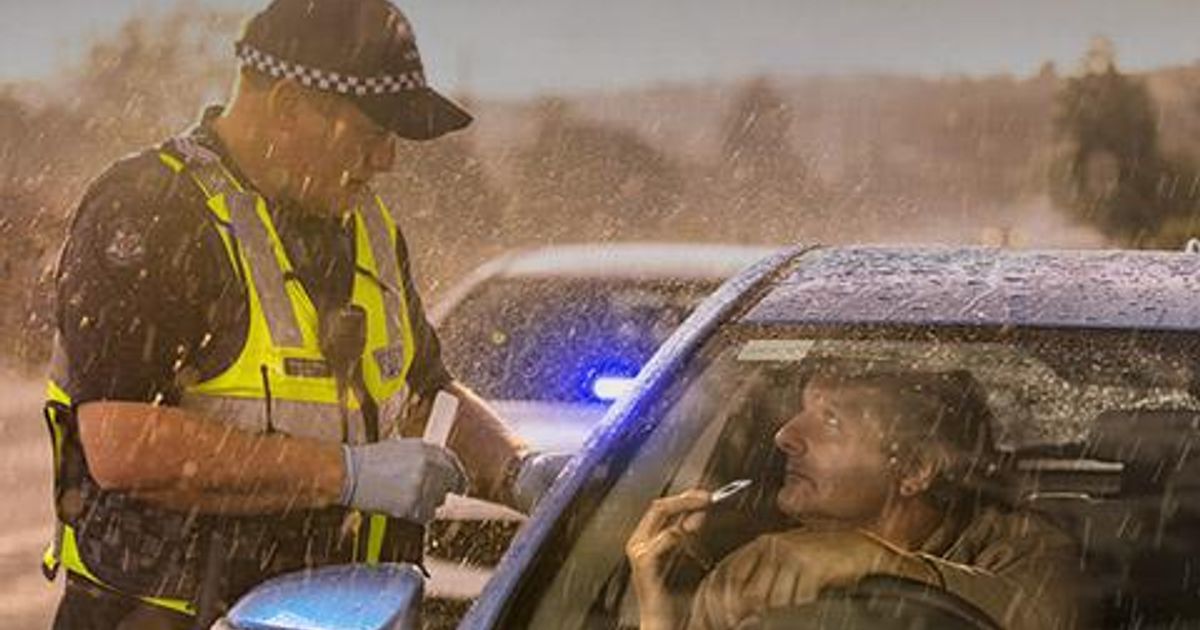
Victoria Police will carry out an additional 25,000 roadside drug tests every year as part of a major investment, including overhauling the testing equipment used by its officers.
It is part of a $21.1 million investment in road policing and safety funded by the Transport Accident Commission, which includes five key projects that will be “phased in” over the next five years. Some are already underway.
Victoria Police currently conduct 150,000 roadside drug tests annually and this increase to 175,000 tests is worth $4.536 million. It expects to achieve this goal this financial year.
Since the 2018/19 financial year, the target has been 150,000 annual tests, replacing the previous target of 100,000 annual tests.
With Daily Sparkz you can save thousands on a new car. Click Here to get a great deal.
The additional investment will replace 123 evidentiary breath testing devices and purchase an additional 27 new devices valued at $1.49 million.
Evidence-based breath testing is used to obtain evidence after a driver receives a positive result on a preliminary roadside breath test.
Victoria Police say it is also developing a new application to automate administrative processes related to alcohol and drug testing, which it says will give officers more time to patrol the state’s roads.
The Roadside Impaired Driver Evidence app is valued at $5.84 million.
Victoria Police say drug-impaired driving is a leading cause of road trauma in the state. Last fiscal year, 793 accidents were recorded in the state where the driver was under the influence of drugs, and a total of 8,294 motorists were caught driving on drugs.
To further improve the detection of dangerous and unauthorized drivers, 88 police vehicles will be equipped with Automatic Number Plate Recognition (ANPR) technology at a cost of $6.39 million. These will join a fleet of nearly 250 vehicles across the state that already have this technology.
These vehicles will be assigned to all 24-hour stations across the state to ensure general duty officers have access to this ability to detect and apprehend dangerous and unauthorized drivers.
Finally, another technology investment will see a total of $2.84 million invested in replacing and upgrading in-car police video technology in 98 vehicles assigned to individual stations in regional and remote locations.
As part of the Victorian Road Safety Strategy 2021-2030, Victoria Police, the Transport Accident Commission and other government agencies are working to halve road fatalities by 2030 and eliminate them completely by 2050.
“This is a huge investment by the Transport Accident Commission and there is no doubt it will save lives,” said Glenn Weir, Deputy Commissioner for Road Policing.
“We will drug test more drivers than ever before.”
Victoria Police roadside drug testing is currently detecting MDMA (also known as ecstasy), methamphetamine (found in drugs such as ice) and THC, the active ingredient in cannabis.



