



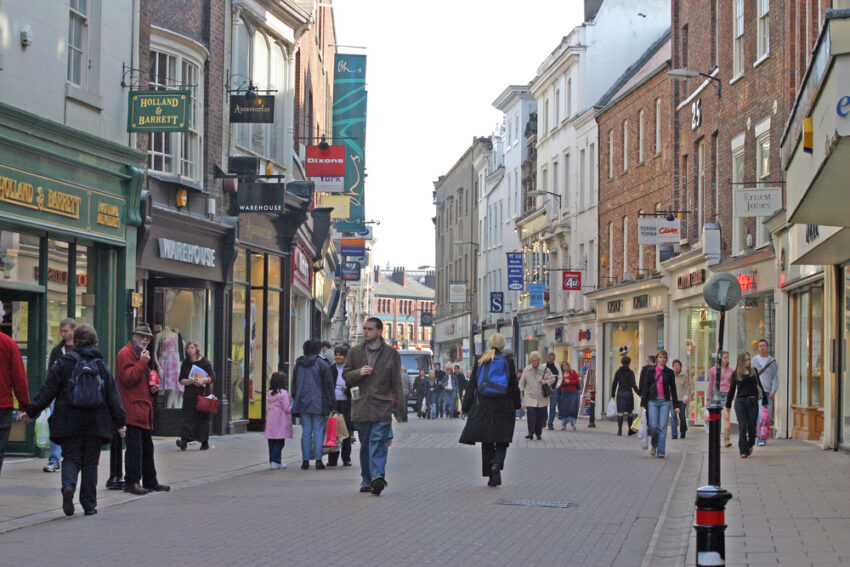
Fears about the strength of the UK economy appear to have kept shoppers away from the high street on Black Friday, adding to growing signs that consumer restraint will weigh heavily on growth through 2026.
Footfall at all shopping destinations fell 2% on Friday and was 7.2% lower than on corresponding days last year, according to data from monitoring firm MRI Software. Only locations close to offices in central London bucked the trend, recording a slight increase as workers browsed stores on breaks or on the way to work.
While much Black Friday activity has moved online, the picture there has been mixed too. Online retail association IMRG reported a sharp drop in sales on Thursday, but noted a stronger trend earlier in the week.
“Cost of living pressures appear to be weighing on overall activity,” said Jenni Matthews of MRI Software.
The muted results coincided with a warning from consultancy KPMG, which said weak consumer spending would be one of the biggest drags on the economy over the next 12 months. Even though much of the tax-raising impact of Rachel Reeves’ £26bn first Budget will not be implemented immediately, budgets remain under severe pressure as unemployment rises to 5.2%, according to KPMG.
“The growth outlook in 2026 is muted, reflecting the impact of a cooling labor market and weak household spending,” said Yael Selfin, chief economist at KPMG. She pointed to some positive areas, including investment in green energy, and said the medium-term situation could improve if planning reforms helped boost housing construction. KPMG forecasts GDP growth of 1% in 2026 and 1.4% in 2027.
Two separate reports released Monday reinforced business leaders’ gloomy outlook. The CBI’s latest services sector survey, conducted before the budget was passed, recorded the sharpest fall in business optimism in three years, with companies citing rising costs and uncertainty over future demand.
“Businesses expect little relief in the near term as uncertainty over demand and ongoing cost pressures will constrain future hiring and investment plans,” said the CBI’s Charlotte Dendy.
Meanwhile, the Institute of Directors said its confidence index remained near historic lows, slipping to -73 in the run-up to the Budget before rising slightly to -72 afterwards. “Ongoing speculation about tax rises kept confidence subdued,” said Anna Leach, chief economist at the IoD. “With four out of five business leaders taking a negative view of the budget, confidence remains near record lows.”
Hospitality businesses also warned they will face significant financial pressure from changes to business rates next year, despite measures in the Budget to ease the transition from Covid-era support systems. Many pubs are expecting steep rises as the rateable value of their premises rises – a key part of the business rates formula – unlike many retailers whose valuations will fall due to weaker retail activity.
In her budget speech, Reeves said she was introducing “permanently lower tax rates for over 750,000 retail, hospitality and leisure properties,” funded in part by higher tax rates at major retailers and online giants. But operators say the reality will be far harsher for pubs in particular.
“In the vast majority of cases it appears that instead of the promised reduction in our bills, our members will be expected to do more – in many cases significantly more – when existing support ends next April,” said Paul Crossman, chairman of the Campaign for Pubs and licensee of three pubs in York.
Alex Reilley, founder of cafe-bar chain Loungers, said the company’s classification of some of its venues had mitigated the impact, but warned that many operators would still face higher costs. “Most hospitality businesses will expect an increase of some sort,” he said. “Our pub sector could easily face extinction.”
The government has pledged billions of pounds in transition relief to mitigate sharp rises in business rates next year. But industry analysts warn that the measure will merely delay the financial impact – rather than eliminate it.



