



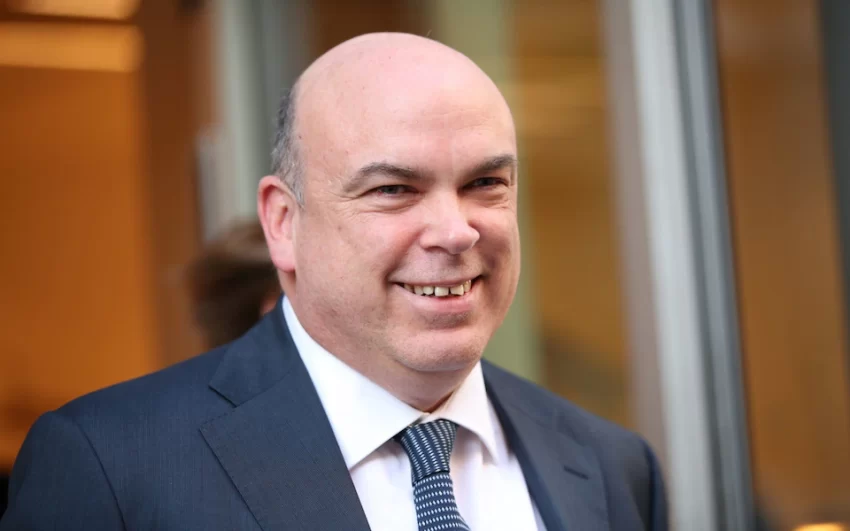
Hewlett Packard has filed a final lawsuit worth almost $1.8 billion (£1.4 billion) against the estate of Mike Lynch, intensifying one of the longest and most expensive corporate fraud disputes in British legal history.
The latest demand is well below the $5 billion HP originally demanded over its ill-fated takeover of Autonomy in 2011, but still exceeds the late entrepreneur’s estimated £500 million estate.
Lynch, once hailed as Britain’s answer to Bill Gates, died in August last year when his superyacht sank off the coast of Sicily during celebrations following his acquittal in a separate US criminal case. The incident killed seven people, including Lynch and his daughter. The tragedy left open questions about how much his estate would ultimately owe HP after the Supreme Court found him liable for civil fraud.
In a lengthy 2022 ruling, Judge Hildyard concluded that Lynch and Autonomy’s former chief financial officer, Sushovan Hussain, fraudulently inflated the software company’s revenue and misrepresented its performance before selling it to HP for $11 billion. Although the judge said HP would have gone through with the deal anyway if it had known Autonomy’s true financial position, he ruled that Lynch and Hussain had intentionally misled the buyer.
Earlier this year, Hildyard ruled that Lynch’s estate should pay more than £700 million in damages. The main focus of this week’s hearing is to determine the exact amount, including interest. HP argues that interest payments alone total $761 million. However, Richard Hill KC, representing the Lynch estate, called HP’s calculation “exaggerated” and said its position was “too simplistic” and accused the company of assuming it was “the winner in this litigation” without acknowledging the complexity of the case.
HP’s Patrick Goodall KC reiterated the company’s position, arguing that Lynch “not only committed an enormous fraud, but lied about it at every stage.”
The Lynch estate is contestable on several technical grounds, including whether HP had legal standing to sue for fraud based on its corporate structure at the time of the acquisition. The estate also questions how Autonomy’s true value was calculated and what currency should be used in determining portions of damages.
The bitter dispute dates back more than a decade. Hussain was convicted of fraud in the US in 2018 and sentenced to five years in prison before being released in early 2024. He later settled with HP in the British civil case for 77 million pounds. In 2021, the Financial Reporting Council fined Deloitte £15 million for “serious errors” in its audit of Autonomy’s accounts.
Lynch himself faced a lengthy extradition battle before being sent to the United States to stand trial in 2023. He was finally acquitted in June 2024, along with Stephen Chamberlain, Autonomy’s former vice president of finance. The UK civil case launched by HP in 2015 was heard in 2019 and has become one of the longest-running and most expensive commercial cases ever brought before the High Court. Goodall told the court that HP had spent £150m on the litigation.
A spokesman for the Lynch family claimed that HP’s claim remained “fundamentally flawed” and argued that the company’s mismanagement itself had destroyed most of Autonomy’s value.
“By every report, including the court’s, HP’s own mismanagement destroyed most of Autonomy’s value,” he said.
An HP spokesman welcomed the latest hearing, saying it “brings us one step closer to resolving this dispute.”



