



The Australian Automobile Association (AAA) has examined more new models as part of its real-world testing program, including vehicles already tested, and found many of them fail to meet their fuel economy claims.
It tested new or updated versions of the Hyundai Tucson, Kia Sportage, MG HS and Toyota Camry and found that there were major differences between lab fuel economy claims and real-world test results, although the BMW X3 and Mercedes-Benz GLC have improved since the last test.
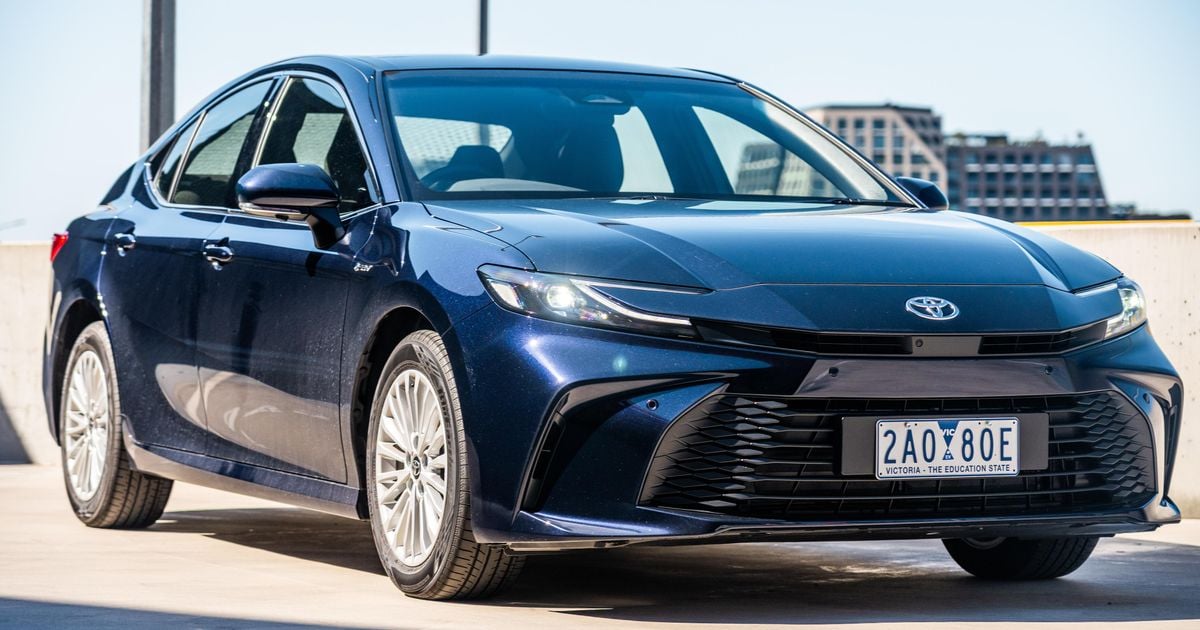
The Camry also had the second largest discrepancy between its official claim and the real test result at 20 percent (4.8 L/100 km versus 4.0 L/100 km). The mid-size sedan also emitted more CO2 than stated (112 g/km versus 91 g/km).
Only the small SUV Chery Tiggo 4 Pro had a larger difference in fuel consumption at 21 percent (8.8 l/100 km versus 7.3 l/100 km). It also emitted 203g/km of CO2, compared to a lab result of 166g/km.
With Daily Sparkz you can save thousands on a new car. Click Here to get a great deal.
Other models tested were able to match their fuel consumption figures (Mercedes-Benz GLA) or even exceed them (the BMW X5, which had 15 percent lower fuel consumption and 15 percent lower CO2 emissions).
In 2022, the federal government provided $14 million to the AAA – the peak body of Australia’s state motoring clubs such as NRMA, RACV and RACQ – to conduct real-world testing of 200 vehicles that had previously only been tested in laboratory conditions.
In addition to reviewing fuel consumption figures for gasoline, diesel and hybrid models, the company also recently announced initial tests on the range of electric vehicles (EV).
“Real-world testing is an important tool to help consumers and fleet buyers save money by determining which cars perform as advertised and which don’t,” said AAA CEO Michael Bradley.
“At a time when regulators around the world are imposing increasingly stringent emissions standards on automakers to reduce emissions, real-world testing also provides important data that shows how automakers are responding to these requirements.”
The AAA has said the need for real-world testing was first demonstrated by the Volkswagen emissions scandal, commonly known as Dieselgate, in which Volkswagen vehicles were found to have used “defeat device” software to cheat lab tests, and it claims real-world data is important for both households and fleet buyers during the cost of living crisis.
But the AAA has been criticized for causing confusion with its real-world tests, which are carried out from a facility in Geelong and on public roads in and around the Victorian city.
“All vehicles sold in Australia, including electric vehicles, are tested under rigorous laboratory conditions set out in Australian Design Rule 81/02,” FCAI CEO Tony Weber said in August.
“This consistent methodology ensures that vehicles can be reliably compared regardless of make or model.
“Testing conducted outside of the ADR process is influenced by many variables, including traffic, terrain, weather and driving style. No two drivers and no two rides are the same.”
“We support transparent, evidence-based information for consumers, but it must be consistent. When conflicting numbers are published, it undermines trust and creates unnecessary confusion.”
The Electric Vehicle Council has also reprimanded the AAA for its real-world testing of electric vehicles.
Below are the latest fuel economy results. More detailed overviews for each test vehicle can be found on the AAA website.
All models tested were 2025 examples, with the exception of the 2024 Cupra Formentor and Subaru WRX. Below we have detailed the fuel economy figures and real-world test results for each vehicle in the latest AAA round.
SUVs
| Model | variant | Entitlement to mandatory laboratory tests (l/100 km) | AAA test result (L/100 km) | inequality |
|---|---|---|---|---|
| BMW X1 | xDrive20i | 7.2L/100km | 7.3L/100km | +2% |
| BMW X3 | 20xDrive | 7.5L/100km | 7.3L/100km | -3% |
| BMW X5 | xDrive30d M Sport | 7.8L/100km | 6.7L/100km | -15% |
| Chery Tiggo 4 Pro | Ultimate | 7.3L/100km | 8.8L/100km | +21% |
| Chery Tiggo 7 Pro | SE | 7.0L/100km | 7.7L/100km | +10% |
| Cupra Formentor | VZx | 7.7L/100km | 8.4L/100km | +9% |
| Lexus UX | 300h | 4.2L/100km | 4.9L/100km | +16% |
| Mazda CX-80 | G40e Pure | 8.4L/100km | 8.0L/100km | -5% |
| Mercedes Benz GLA | 250 4Matic | 7.9L/100km | 7.9L/100km | 0% |
| MG HS | Mood | 6.9L/100km | 7.2L/100km | +5% |
| Nissan Qashqai | ST | 6.1L/100km | 6.8L/100km | +11% |
| Subaru Crosstrek | Hybrid L | 6.5L/100km | 7.2L/100km | +10% |
| Volvo XC60 | More B5 | 7.6L/100km | 8.0L/100km | +6% |
Passenger cars
| Model | variant | Entitlement to mandatory laboratory tests (l/100 km) | AAA test result (L/100 km) | inequality |
|---|---|---|---|---|
| Subaru WRX | Sports car tS | 8.5L/100km | 8.3L/100km | -3% |
| Toyota Camry Hybrid | Ascension | 4.0L/100km | 4.8L/100km | +20% |
Commercial vehicleS
| Model | Entitlement to mandatory laboratory tests (l/100 km) | AAA test result (L/100 km) | inequality |
|---|---|---|---|
| Ford Ranger Raptor | 11.5L/100km | 12.3L/100km | +7% |
| Hyundai Staria cargo | 7.0L/100km | 7.2L/100km | +4% |
MORE: Opinion: Why “real” EV range tests are fake news
MORE: Practical tests show that the Ford Ranger is one of the models that comply with emissions regulations
MORE: Real-world testing shows that not all hybrid vehicles are equally good when it comes to fuel economy
MORE: Practical tests show which cars are thirstier than claimed
MORE: Real fuel consumption shows that popular Australian new cars significantly exceed the claims



