



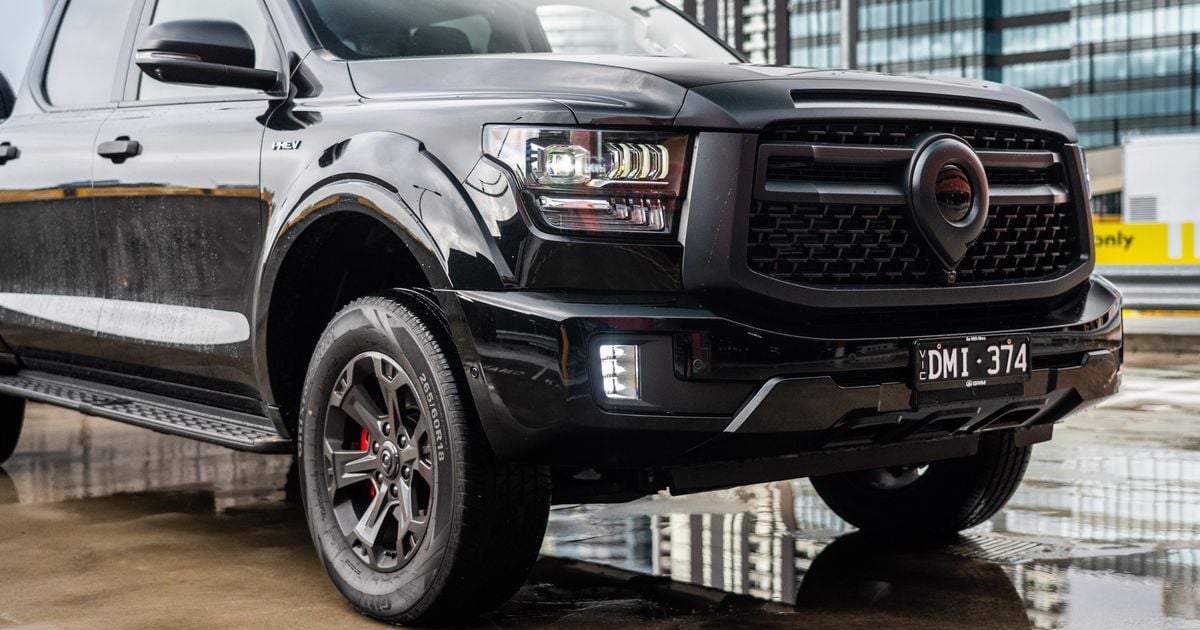
GWM has confirmed it is working on diesel hybrid and diesel plug-in hybrid powertrains that will launch in China in early 2027 – and their release in Australia is planned given the importance of our market to the Chinese automaker.
“We have both (powertrain types in development), it can be hybrid and plug-in hybrid, you can choose whatever you want,” GWM chief technology officer Nicole Wu told Australian and New Zealand media.
She confirmed that GWM is developing technical solutions to address NOx and particulate emissions, which are typically a challenge in diesel engines.
With Daily Sparkz you can save thousands on a new car. Click Here to get a great deal.
“The emissions treatment systems of a diesel engine built for a conventional car and a hybrid engine are very similar,” explained Adam Thomson, GWM technical director and chief engineer. “The solution to the emissions problem is basically the same.”
Ms Wu said GWM believes diesel hybrids will be important for Australia, likely referring to our emissions regulations under the New Vehicle Efficiency Standard (NVES).
Since these diesel hybrids won’t be available in China until early 2027, an Australian launch is likely to follow thereafter – giving Chery a head start on GWM, with its new diesel plug-in hybrid ute due here before the end of 2026.
However, GWM has been working on diesel hybrid and diesel plug-in hybrid (PHEV) technology for some time.
“The diesel hybrid technology is not new. It has been in development for around six years,” GWM chairman Jack Wei told Australian and New Zealand media through a translator.
“Testing in commercial vehicles has shown that fuel savings of around 15 percent are possible in flat conditions and up to 30 percent in more demanding environments such as Australia.
“The traditional weaknesses of the diesel engine, such as delay in acceleration and increased noise, are eliminated by electrification. Electric assistance eliminates delay and reduces noise.”
“At speeds of around 50 to 60 km/h, the noise level is comparable to that of petrol vehicles. In many cases the difference would not be noticeable to the customer.
“According to the GWM tests, diesel engines with hybrid systems can meet very strict emissions standards, including Euro 7, in some cases even without AdBlue.”
No specifications have yet been released for these new electrified diesel powertrains, although GWM currently offers a 2.4-liter turbodiesel four-cylinder engine in its Cannon and Cannon Alpha models, with a new 3.0-liter unit due to follow later this year.
GWM also hasn’t confirmed which of its models will offer this technology. The company currently only offers diesel powertrains in its larger body-on-frame vehicles, including its utes and the Tank 300 and Tank 500 off-road SUVs sold in Australia.
While other brands, including Mercedes-Benz, currently offer or have already offered diesel plug-in hybrid powertrains in other markets, none have been offered in Australia.
There were mild-hybrid diesel engines in the ute segment, including in the Toyota HiLux, but otherwise more electrified powertrains used petrol engines at their core – including GWM’s own Cannon Alpha PHEV.
GWM also previously offered a conventional petrol hybrid version of the Cannon Alpha in Australia, but discontinued this in favor of the PHEV.
The Chinese brand offers a wide range of petrol hybrid and petrol plug-in hybrid vehicles in Australia, including not only small and ladder-frame SUVs, but also more car-like crossover SUVs.
This made it the third largest brand for hybrid sales in Australia in 2025 and the third largest brand for PHEVs overall.
MORE: Discover the GWM showroom



