



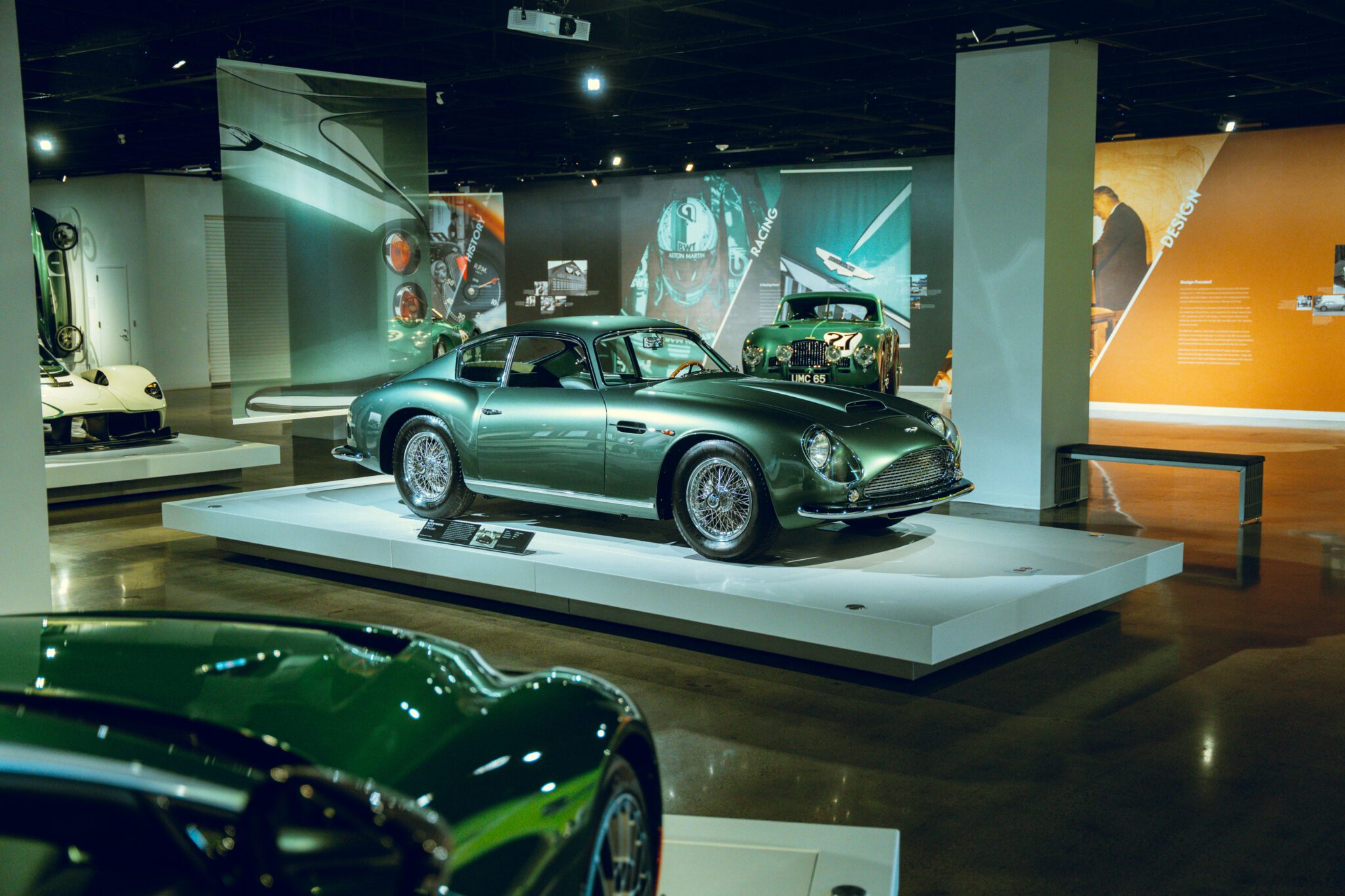
All the very best Astons in one place.
This fall, the Petersen Automotive Museum in Los Angeles opens its first-ever Aston Martin exhibition, “Performance and Prestige: A History of Aston Martin.” Now open to the public, the exhibition highlights more than a century of design and engineering from the British brand known for combining luxury, performance and a touch of flair. It’s a rare opportunity to see how the brand evolved from early racing machines to modern hypercars and continued to define its future.
The showcase brings together more than a dozen cars that capture Aston Martin’s most memorable moments. The 1949 DB2 prototype represents the postwar rebirth of sports cars, scoring a class podium at Le Mans and setting the stage for future DB models. The 1961 DB4GT Zagato, one of only nineteen built, remains a perfect combination of British craftsmanship and Italian style. Across the room, a testament to Aston Martin’s willingness to experiment, stands the 1979 Bulldog, a unique concept with gullwing doors and a twin-turbo V8 that still seems ahead of its time. Newer models like the 2015 Vulcan and 2021 Valkyrie Spider bring the brand’s history into the modern day, with naturally aspirated V12 engines and track-inspired aerodynamics that blur the line between race car and road car.
Proudly on display as part of the exhibition, the Aston Martin AMR23 Formula 1 car provides a competitive advantage. The car scored eight podiums in the 2023 season with Fernando Alonso and Lance Stroll, marking a strong return to top motorsport. Positioned alongside its ancestors, it combines the brand’s earliest racing dreams with its current pursuit of the podium.
Since its founding in 1913 by Lionel Martin and Robert Bamford, Aston Martin has combined racing spirit with timeless design. The cars on display at Petersen show how this philosophy endures, each reflecting the era in which it was built. “Performance and Prestige: A History of Aston Martin” runs from October 26, 2025 to October 2026 at the Petersen Automotive Museum.
Source: Petersen Museum



